

The heat kicked on, or you carried your pothos in from the balcony last week, and now there's a yellow leaf. Then three. Yellow leaves on plants are one of the most common worries we hear from plant parents in fall, and they're almost always fixable.
A yellow leaf is your plant's way of flagging that something in its routine shifted, usually water, light, or food. The fix comes down to a few plant care basics, and once you know which one changed, your next move gets clear.

What Yellow Leaves on Plants Mean
Leaves get their green from chlorophyll, the pigment that turns light into food. When a leaf stops making or holding onto chlorophyll, it fades to yellow. Plant people call this chlorosis, the abnormal yellowing of leaf tissue.
The cause usually sits below the leaf, in the roots, soil, light, or feeding routine. Indoors, watering tops the list, and most of the time it's too much water.
Some yellowing is plain old age. If one or two of the oldest, lowest leaves turn yellow while fresh growth keeps coming in up top, your plant is retiring leaves it no longer needs. That's normal.
Before you change anything, check these with the plant in front of you:
-
Which leaves are yellow: the older ones near the bottom, or the newest ones at the top?
-
How does the soil feel an inch or two down?
-
Are the yellow leaves soft and limp, or dry and crispy?
Start With Where the Yellow Shows Up
The location of the yellow narrows things down fast, often before you lift the pot. Texture is your second clue: soft, mushy leaves point to too much water, while dry, crispy, or curled leaves point to too little water or too much sun.
|
Where you see it |
What it looks like |
Likely cause |
First check |
|
Oldest, lowest leaves, one at a time |
Even yellowing, rest of the plant healthy |
Normal aging or low nitrogen |
Is new growth healthy? |
|
Older leaves, several at once |
Soft and limp, soil still wet |
Overwatering or root rot |
Soil moisture, then roots |
|
Lower leaves |
Yellow, then crispy brown; plant droops |
Underwatering |
Is the soil dry and the pot light? |
|
Newest leaves at the top |
Yellow between green veins, or pale all over |
Iron or sulfur shortage, often a pH or root problem |
Root health and soil age |
|
Older leaves |
Yellow between green veins |
Magnesium shortage |
Feeding history |
|
Edges of older leaves |
Yellow margins that turn brown |
Potassium shortage |
Feeding history |
|
The whole plant |
Evenly pale |
Low light or a general nutrient shortage |
Distance from the window |
|
The side facing the window |
Bleached or scorched patches |
Too much direct sun |
Hours of strong afternoon sun |
|
Leaves all over, suddenly |
Yellowing and dropping within days |
Cold drafts or shock from a move |
Vents, doors, recent moves |
|
Scattered across leaves |
Tiny yellow specks, webbing, sticky residue |
Pests |
Undersides of leaves |
The Most Common Causes, and How to Tell Them Apart
1) Overwatering and Root Rot
Roots need air as much as water. In soggy soil, water fills the pockets that normally hold oxygen, roots start to suffocate, and they stop taking up water and nutrients. That's why an overwatered plant can look thirsty while sitting in wet soil.
Watch for soft yellow lower leaves, soil that stays damp for days, a sour smell, or fungus gnats hovering over the pot. If you're unsure, slide the plant out. Healthy roots are firm and white or tan; rotting roots are brown or black, mushy, and slip apart when you pull.
The usual triggers are a pot with no drainage hole, water left in a saucer or cachepot (a decorative outer pot with no hole), heavy or compacted soil, and watering on a fixed schedule whether the soil is dry or not. Winter makes all of these worse.
Stop watering, empty the saucer, and from here on let the soil dry out between waterings. If the roots are damaged, our guide on how to save a plant with root rot walks you through trimming and repotting.
2) Underwatering
Underwatering gets less attention than overwatering, but it yellows leaves too. The leaves go yellow, then crispy and brown. The plant droops but perks up within hours of a drink, the soil pulls away from the pot's edge, and the pot feels light.
If water rushes straight out the bottom, the soil may have gone hydrophobic, meaning it dried so thoroughly that water beads up and runs off. Water slowly until it drains, then water again. For badly dried soil, set the pot in a bowl of water for 20 to 30 minutes so it soaks up from below.
For plants that dry out fast near a radiator, our Terracotta Watering Bulbs release water slowly into the soil for about seven days.
3) Too Little or Too Much Light
Plants make their food from light. With too little, photosynthesis slows and the plant drops older leaves to save energy. You'll see pale color and long stems leaning toward the window.
Low light also slows how fast a plant drinks, so soil stays wet longer. If your watering hasn't changed but the leaves look overwatered, dim light may be behind it. Too much direct sun looks different: bleached or scorched patches on the side facing the window, often with crispy edges.
Fall catches most of us off guard. Shorter days mean a plant that thrived in August can start yellowing in October, and low light is behind a lot of houseplant leaves turning yellow through fall and winter.
Move the plant closer to your brightest window and give it a quarter turn every week or so. Our post on how much light indoor plants need explains how to read your windows.
When the window isn't enough, Modern Sprout's Smart Growbar sticks under a shelf or cabinet without drilling and gives off full-spectrum light, so a dim bookshelf can keep plants growing through winter. Browse more grow lights.
4) Nutrient Deficiencies
Potted plants have a limited pantry. Every watering rinses a few nutrients out the bottom, the plant uses up the rest, and after a year or two the soil has little left to give.
Where the yellow appears tells you which nutrient is low. Mobile nutrients can be moved from old leaves to new ones when supplies run short, so nitrogen, magnesium, and potassium shortages show up on older leaves first. Immobile nutrients like iron and sulfur stay put, so the newest growth goes without.
-
Nitrogen: even yellowing on older, lower leaves, plus slow growth.
-
Magnesium: yellow between the veins of older leaves while the veins stay green, a pattern called interveinal chlorosis.
-
Potassium: yellow edges on older leaves that brown as they go.
-
Iron: interveinal yellowing on the newest leaves. The iron is often in the soil already, but high pH or damaged roots block it.
-
Sulfur: new leaves pale yellow all over.
Soil pH measures how acidic or alkaline your mix is, and most houseplants like it slightly acidic. When pH drifts too high, nutrients get locked up where roots can't reach them. If you already feed regularly and leaves stay yellow, suspect pH or the roots before adding more fertilizer.
Epsom salt helps only when magnesium or sulfur is confirmed short. It won't fix watering, light, or nitrogen problems, and extra doses leave salts in the pot.
For most nutrient yellowing, the fix is regular feeding during active growth, plus fresh potting mix if your soil is a few years old. Our Dissolving Plant Food Sheets are pre-dosed and seaweed-based, and they're gentle enough to use every time you water.
For timing by season, see how often you should fertilize indoor plants.
5) Too Much Fertilizer
Feeding at the right dose keeps leaves green, but overfeeding brings its own yellowing, usually with brown, crispy tips. You might also see a white crust of mineral salts on the soil or pot rim, and wilting even in moist soil.
It most often happens when a plant gets a full-strength fertilizer dose while resting in winter or low light, gets a double dose, or gets fed while the soil is bone-dry. Flush the pot with plain water several times, then pause feeding for four to six weeks. Once new growth looks healthy, go back to the dose on the label.
6) Temperature Shock and Drafts
Most tropical houseplants get unhappy below about 50 to 55°F. Cold window glass, an exterior door, or an AC or heating vent can bring on sudden yellowing and leaf drop within days.
Plants coming inside after a summer outdoors often shed yellow lower leaves while they adjust to less light and drier air. Our guide on when to bring your plants inside for winter covers the timing. Keep plants away from vents and drafts, and expect a little leaf drop after any move.
7) Pests
Sap-feeding pests leave tiny yellow specks called stippling that spread across the leaf. Look for fine webbing from spider mites, white cottony tufts from mealybugs, or sticky residue from aphids and scale.
Isolate the plant, wipe the leaves, and treat with insecticidal soap or neem oil, repeating weekly for several weeks.
8) Rootbound Plants
A rootbound plant has filled its pot with roots and run out of soil. Roots circle the pot or poke out the drainage hole, water runs straight through, and the soil dries within a day or two.
Repot into a container about 1 to 2 inches wider with fresh potting mix, gently loosening circling roots first.
9) Normal Leaf Aging
One lower leaf at a time is just aging. Look closer when several leaves go at once, the yellowing climbs the plant, or new leaves come in pale.
And on some plants, yellow belongs. Pothos varieties like 'Neon', 'Marble Queen', and 'Lemon Top' are bred to carry chartreuse, cream, or yellow in their leaves.

Yellow Leaves on Herbs and Hydroponic Kits
Herbs yellow faster than most houseplants. Basil, mint, and cilantro have shallow roots, use nutrients quickly, and need lots of light. Basil wants six or more hours of bright light, and cold below about 50°F yellows and blackens its leaves.
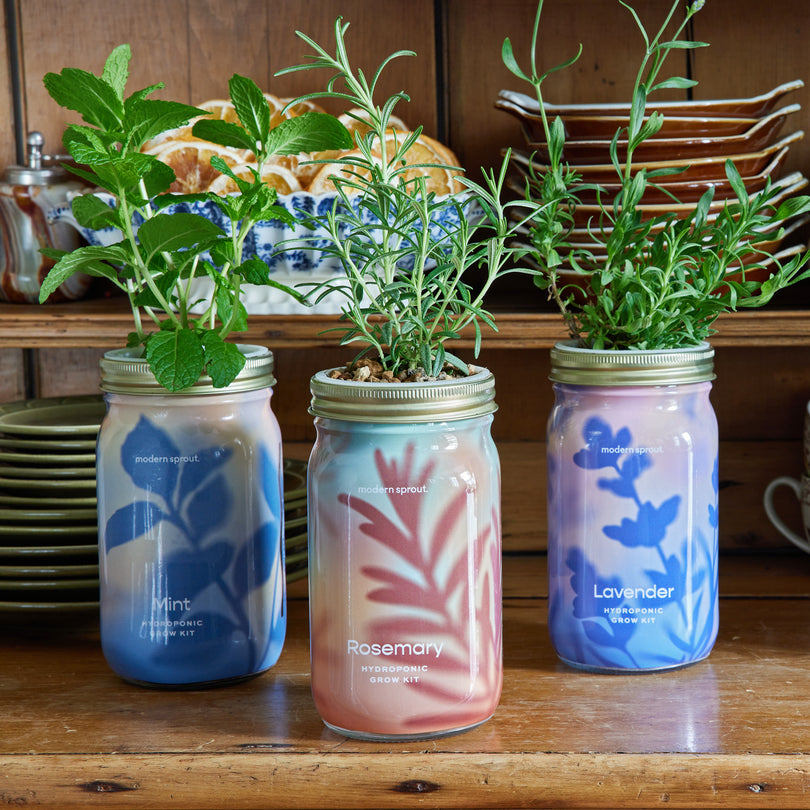
Our Garden Jars grow herbs with immersion hydroponics, meaning the roots reach into a reservoir of water with no soil at all. When leaves yellow in a jar, check water level, plant food, and light.
Nutrients in the water get used up over time, so leaves turn pale when the reservoir runs low on food. Top up the water and add plant food on the schedule in your kit's instructions. When the included packet runs out, Dissolving Plant Food Sheets are safe for hydroponic grow kits too.
Garden Jars need at least six hours of direct light a day, so a grow light helps in winter. Healthy roots in water are white or cream; brown, slimy, or smelly roots mean the water has gone stale.
Too many seedlings in one small jar grow weak and yellow, so thin them to the strongest few. If a jar is past saving, our Immersion Hydroponic Replant Kit comes with fresh seeds, grow medium, and plant food so you can start over.
Browse more hydroponic grow kits.
How to Fix Yellow Leaves, Step by Step
-
Note the pattern. Check which leaves are yellow and how they feel, then find the closest match in the table above.
-
Feel the soil. Push a finger 1 to 2 inches in. Wet soil sends you toward watering, drainage, and roots.
-
Check drainage. Make sure the pot has a hole and the saucer is empty.
-
Look at the roots if the soil stays wet or the plant keeps declining.
-
Check light and placement. Note the distance from the window, nearby vents, and any recent move.
-
Flip a few leaves and look underneath for pests.
-
Review feeding. Note your last feeding and the soil's age. If feeding is the step you skip most, our Dissolving Plant Food Sheets fold it into the watering you already do.
Make one change, then give the plant two to three weeks to respond before you try another. Leaves that already turned yellow won't recover, so judge progress by what comes next: no new yellow leaves and healthy new growth.
Should You Cut Off Yellow Leaves?
Can a yellow leaf turn green again? A fully yellow leaf can't, because its chlorophyll is gone. Slightly pale leaves from an early light or nutrient problem can sometimes regain some color once you fix the cause.
A partly yellow leaf can stay on while your plant recovers, since it's still making some food. Remove a leaf once it's more than about half yellow, and right away if it's brown, mushy, or covered in pests. Avoid taking more than about a third of the foliage at once.
Cut where the leaf stalk meets the stem with clean, sharp snips. Modern Sprout's Shears have a needle-nose tip that slips between crowded stems, and a coil spring at the pivot reopens the blades after each cut. Trimming tidies the plant, but new leaves will keep yellowing until you fix whatever started it.
Common Houseplants and Their Yellow-Leaf Patterns
1) Pothos
Overwatering is the usual culprit, so let the soil dry halfway down before you water again. Variegated types also fade in low light.
2) Money Tree
Money trees are often sold in pots without drainage, which invites overwatering. Drafts and sudden moves bring on leaf drop.
3) Snake Plant
Soft, mushy yellow leaves almost always mean rot from overwatering, so water very sparingly in winter.
4) Rubber Plant
Rubber plants drop yellow lower leaves after a move, in low light, or near cold drafts.
5) Monstera
Monstera yellows from overwatering plus low light. Yellow lower leaves during a flush of new growth usually mean it's hungry.
6) Peace Lily
Peace lilies droop when thirsty, which is normal. Yellow leaves point to overwatering, old age, or tap-water minerals.
What the Next New Leaf Will Tell You
Most yellow leaves trace back to how wet the soil stays, how much light reaches the plant, or how long it's been since the last feeding. Check those first, change one, and judge the result by the next leaf that unfurls.
If that new leaf comes in green, you've found your fix. If it comes in yellow too, check the next likely cause in the table and give that change the same two to three weeks.

