

If you've ever hovered over a wilting pothos wondering whether it's hungry or whether feeding it will make things worse, you're in good company. Nearly half of our customers tell us they're unsure how, or even why, to feed their plants, and the fear of overdoing it is the reason we hear most.
The good news: the schedule is simpler than it looks, the exceptions are learnable, and if you'd rather not track a schedule at all, there's now a format designed to make feeding part of every watering. Here's how to feed everything in your indoor plant care routine with confidence.

How Often to Fertilize Indoor Plants
Most houseplants do best with fertilizer every 2 to 4 weeks during active growth in spring and summer. In fall and winter, pause feeding or cut it to half strength. If you use a slow-release formula, one application every 3 to 6 months covers the same ground.
And if you use our Dissolving Plant Food Sheets, the schedule is simply your watering schedule. They're gentle enough to feed every time you water, so there's no separate feeding calendar to keep.
Treat those numbers as a starting point rather than a rule. The right frequency for your plant depends on four variables: its growth stage, how much light it gets, how old the potting mix is, and what type of fertilizer you're using.
A potted plant lives in a closed system. Whatever nutrients it gets, you supply. Once that clicks, every schedule adjustment below starts to make sense.
Why Potted Plants Run Out of Nutrients
Fresh potting mix comes pre-charged with nutrients, usually enough for 2 to 3 months of growth. Every time you water, some of that charge dissolves and drains out the bottom of the pot. Growth uses up the rest.
Outdoor soil replenishes itself. Fallen leaves break down, microbes cycle organic matter, and rain redistributes minerals. A pot on your windowsill has none of that machinery, which is why we've called spent potting mix a food desert. Our guide on why plants need plant food covers the depletion story in full; this piece covers the schedule.
Reading the NPK Ratio Before You Set a Schedule
Every fertilizer label carries three numbers, the N-P-K ratio, showing the percentage of nitrogen, phosphorus, and potassium. Nitrogen fuels foliage and that deep green leaf color. Phosphorus supports roots, buds, and flowers. Potassium keeps the whole plant's cell function and stress resistance humming.
Concentration and frequency move together. A gentle 3-2-1 or 4-3-2 formula can be fed more often, while a 20-20-20 synthetic concentrate needs careful dilution and longer gaps between feedings. Concentration is only half the story, though. Delivery matters just as much, which is why a pre-dosed or seaweed-regulated format can stay gentle at numbers a straight concentrate couldn't.
The sheets are a working example: a 6-9-17 grade that stays safe for every watering because the seaweed delivery regulates how fast the nutrients reach the roots.
A balanced formula like 10-10-10 suits most foliage plants. Flowering houseplants respond to bloom-weighted ratios, and heavy leaf producers appreciate extra nitrogen.
Plants also need small amounts of micronutrients like iron, magnesium, and calcium. Deficiencies here look different from a nitrogen shortfall: iron chlorosis yellows new leaves between green veins, while nitrogen hunger fades older leaves uniformly. More on telling those apart below.
Fertilizer Types and What Each One Changes
Your fertilizer format decides your schedule more than any other single choice.
1) Liquid concentrate
Gives the fastest nutrient uptake and the most control, and it demands the most consistency. Feed at label strength every 2 to 4 weeks, or dilute to quarter strength and add it to every watering. Miss a month and your plant simply goes unfed.
2) Pre-dosed dissolving sheets
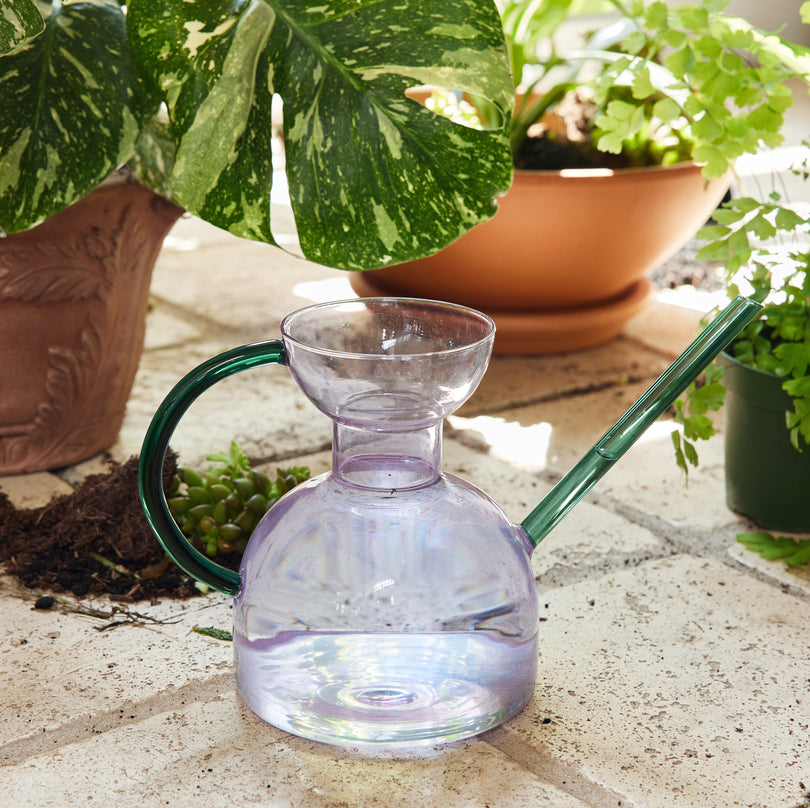
Remove the measuring step entirely. Our Dissolving Plant Food Sheets dissolve one sheet per gallon in the watering can, with a seaweed base that helps regulate nutrient uptake.
That's what lets you use them every time you water: we designed them to be gentle enough to just be part of your regular watering routine, so feeding stops being a separate task you can forget. If dosing anxiety is what's kept you from feeding, this format answers it directly.
3) Slow-release granules and pellets
Release nutrients over 3 to 6 months with almost no effort, at the cost of precision. Warm rooms and frequent watering speed up the release, so a "6-month" formula can spend itself faster than the label suggests.
4) Fertilizer spikes
Concentrate nutrients at a single point in the pot. That creates uneven salt distribution in the root zone, feeding some roots heavily while burning the ones closest to the spike.
5) Organic and biochar-based blends
Mineralize slowly through soil microbes. You get a wider margin for error and less burn risk, with a delayed visible response as the trade-off.
On the synthetic-versus-organic question, skip the values debate and look at salt index. Synthetic concentrates carry more soluble salts, which means faster results and higher burn risk. Organic and kelp-based formulas run gentler on both counts.
Everything you need for the routine lives in our plant care and accessories collection.
|
Format |
Interval |
Effort |
Burn risk |
Precision |
Best fit |
|
Liquid concentrate |
2 to 4 weeks |
High |
Moderate |
High |
Hands-on growers |
|
Dissolving sheets |
Every watering |
Low |
Low |
High |
Anyone nervous about dosing |
|
Slow-release granules |
3 to 6 months |
Very low |
Low |
Low |
Set-and-forget growers |
|
Spikes |
1 to 2 months |
Low |
High at contact point |
Low |
Rarely the best choice |
|
Organic blends |
Per label, forgiving |
Moderate |
Low |
Moderate |
Beginners, sensitive plants |
Feeding Self-Watering and Hydroponic Setups
Here's the variable most fertilizing guides skip entirely. A wicking reservoir delivers water, and anything dissolved in it, to the roots continuously rather than in pulses. Dosing on a calendar makes no sense in that setup.
Instead, dilute your fertilizer to roughly quarter strength and add it to the reservoir at each refill. As reservoir water evaporates, the nutrient salts left behind concentrate. Flush and refill the reservoir fully every few weeks rather than topping it off indefinitely.
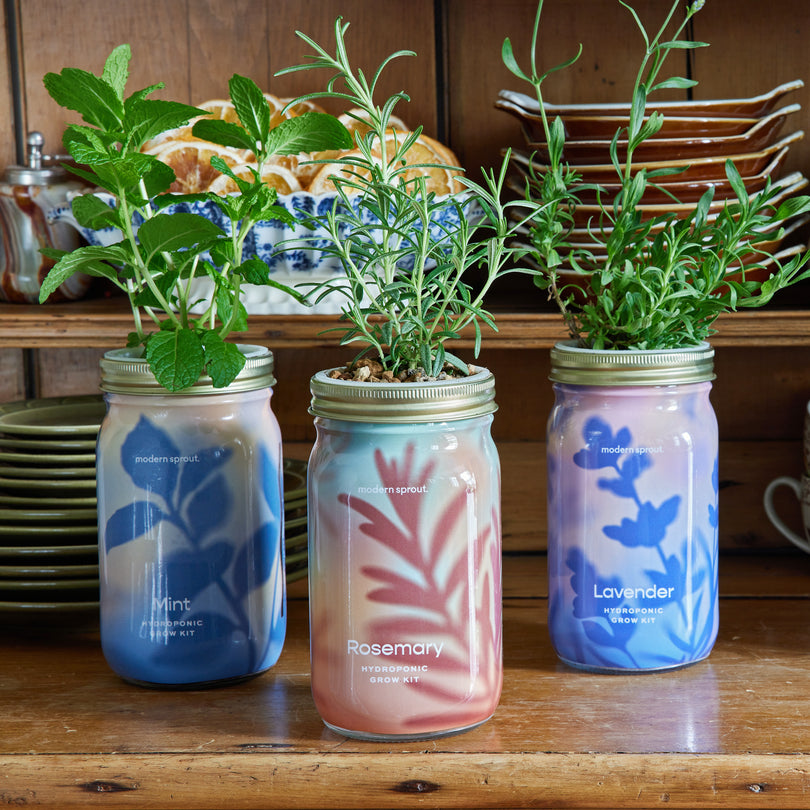
Fully soilless setups raise the stakes further. LECA and hydroponic grow kits have zero nutrient buffer, since there's no potting mix holding a charge. Feeding there isn't seasonal or optional; it's the entire nutrient supply, which is why a fully water-soluble format matters most in these setups.
The sheets cover this setup too: they're rated for hydroponic grow kits, and the perforated strips are pre-dosed at one strip per quart, so you can match the dose to a small reservoir without any math.
How Season and Light Change the Schedule
The standard advice says feed in spring and summer, stop in fall and winter. That calendar rule is really a light rule wearing a disguise. Shorter days slow photosynthesis, growth stalls, and any fertilizer you add sits unused in the soil, accumulating as salts.
So read the plant instead of the calendar. Active growth shows up as new leaves, visible root growth, and faster water uptake. When those slow down, the plant has shifted toward dormancy and needs little or no food.
The exception matters if you grow under lights. A plant under full-spectrum supplemental light on a 12-to-14-hour photoperiod may never truly go dormant. It keeps photosynthesizing, keeps growing, and still needs feeding through winter, typically at half strength every 6 to 8 weeks. An every-watering format sidesteps the winter math here too: if the plant is still drinking, it's still being fed, at a dose gentle enough for the slower pace.

Our grow lights and the Smart Growframe create this exact scenario, which is why "stop fertilizing in November" is bad advice for anyone growing under them. If you're unsure which category your plant falls into, our guide on how much light indoor plants need walks through reading light levels room by room.
Warm homes blur the seasons too. A heated apartment holding 72 degrees all winter keeps some plants in slow growth, so a light quarter-strength feed can still be appropriate. Watch the plant, and let new growth be your signal.
Adjusting Frequency by Plant Type
Rather than memorizing a species list, group your plants by how hungry they are.
-
Fast-growing foliage (pothos, monstera, philodendron, spider plant): every 2 to 4 weeks in season, with a nitrogen-forward or balanced formula.
-
Flowering houseplants (African violet, orchid, hoya, anthurium): every 2 weeks while blooming, using a bloom-weighted formula.
-
Succulents and cacti: every 2 to 3 months at half strength, spring and summer only. These plants prefer lean conditions, and overfeeding is the most common way to hurt them.
-
Indoor herbs and edibles: the heaviest, most consistent feeders in the house. Every harvest removes biomass the plant has to rebuild, so basil and mint on a weekly snipping schedule may want feeding every 1 to 2 weeks. These hungry growers are exactly where an every-watering format earns its keep, since every watering doubles as a feeding. Our guide to growing herbs indoors covers the full care routine.
-
Ferns, calathea, and other salt-sensitive species: quarter strength only. Their thin roots and moisture-loving tissue show tip burn before anything else does.
-
Slow growers (ZZ plant, snake plant, cast iron plant): 2 to 3 feedings per year covers them.
When Not to Fertilize
Hold off on feeding when:
-
The plant is newly purchased. Nursery mixes come pre-charged, so wait 2 to 3 months.
-
You've just repotted. Fresh mix plus disturbed roots means wait 4 to 8 weeks.
-
The plant is stressed, wilting, pest-ridden, or diseased. Fertilizer can't fix a root or water problem, and it adds stress to a plant already struggling.
-
The soil is bone dry. Always water first, then feed. Fertilizer hitting dry roots causes burn.
-
The plant is visibly dormant or shedding leaves for the season.
Skipping a feeding almost never hurts a houseplant, while feeding at the wrong moment can.
Signs You're Fertilizing Too Much or Too Little
Your plant reports its nutrient status if you know how to read it. Run through both lists before changing anything.
-
Over-fertilizing looks like: a white crust on the soil surface or pot rim, brown crispy leaf tips and margins, wilting despite moist soil, sudden leaf drop, stunted growth, or algae blooming in a reservoir.
-
Under-fertilizing looks like: uniformly pale or yellowing older leaves, small new growth, leggy stems, or a full growing season without a single new leaf.
Fertilizer burn gets misdiagnosed constantly because it mimics two other problems. Underwatered plants wilt with dry soil; burned plants wilt with moist soil, because excess salts pull water out of the roots. Low humidity browns tips gradually across many leaves, while burn browns fast and pairs with that telltale white crust.
The yellowing patterns split the same way. Nitrogen deficiency fades older, lower leaves first and fades them evenly. Iron chlorosis yellows the newest leaves while the veins stay green.
To correct over-fertilization, flush the pot with 3 to 4 times its volume in water and let it drain completely. Skip the next 2 to 3 feedings, and repot into fresh mix if the crust keeps returning.
Light and water problems are far more common than nutrient problems. Before reaching for food to fix a sad plant, rule those two out first.
Let the Plant Set the Pace
Feed most houseplants every 2 to 4 weeks in spring and summer, ease off in winter, and adjust for the exceptions: hungry herbs, lean succulents, soilless setups, and anything thriving under a grow light. When you're unsure, feed lighter and watch for new growth.
And if measuring and mixing is the step that's kept you from feeding at all, drop a pre-dosed sheet in the watering can and let feeding ride along with your regular watering routine. Your plants would rather be fed simply than not at all.

