

Fresh basil within arm’s reach of the stove, mint for your tea, parsley you snip instead of buy: an indoor herb garden makes all of it possible, no backyard required. The catch is that “year-round” can sound like a tall order, especially once winter light thins out.
It’s more doable than it looks. Most culinary herbs grow well indoors with three things in place: enough light, consistent watering, and the right herb for your space.
Get those right and a single plant can feed your kitchen for months. We’ll walk through each one, plus how to pick what to grow from our herb collection and keep it productive through every season.
Growing Herbs Indoors: What to Know First
Indoor herb success comes down to a short list of variables: light, temperature, humidity, container and drainage, and which herbs you choose. None of them is complicated on its own. Most problems trace back to one of them being off.
Light is the big one, and we’ll spend the most time there. Temperature matters less than people expect, since most herbs are happy in the same 65–70°F range you keep in your home. The rest is watering discipline and picking herbs suited to indoor life.
If a plant struggles, it’s usually low light, overwatering, or the wrong herb for the spot. Keep those three culprits in mind and you’ll diagnose most issues fast.
Choosing the Right Herbs for Indoor Growing
The easiest way to pick is to start with how you cook, then match that to what grows reliably indoors. No need to grow all seven of the core culinary herbs at once.
Some herbs forgive beginners. Basil, mint, chives, parsley, and oregano are reliable starters that tolerate average light and bounce back after a trim. Others ask more of you. Rosemary, thyme, dill, and cilantro want brighter conditions, and cilantro in particular bolts fast, meaning it flowers and turns bitter when it gets warm or stressed.
It helps to know whether an herb is an annual or a perennial. Annuals like basil, cilantro, and dill live one growing cycle. Perennials like mint, thyme, sage, and chives regrow for years and recover well after cutting, which makes them satisfying first plants.
You also choose a starting point. Seeds are cheapest and most varied but slowest. A nursery plant gives you a head start. A grocery-store cutting can root in water, though results vary.
Here’s a quick reference for the most common indoor herbs.
|
Herb |
Light need |
Difficulty |
Harvest style |
|
Basil |
High |
Moderate |
Pinch often, regrows fast |
|
Mint |
Low–medium |
Easy |
Cut freely, vigorous |
|
Chives |
Medium |
Easy |
Snip outer blades |
|
Parsley |
Medium |
Easy |
Cut outer stems |
|
Oregano |
Medium–high |
Easy |
Trim sprigs |
|
Thyme |
High |
Moderate |
Snip sprigs |
|
Rosemary |
High |
Hard |
Trim woody tips |
|
Cilantro |
High |
Hard, bolts fast |
Cut whole stems young |
Basil and rosemary have a reputation as the tricky ones indoors, mostly because they crave more light than a winter windowsill provides. Worth knowing before you set expectations.
How Much Light Indoor Herbs Actually Need
Light is the single biggest determinant of indoor herb success. Get it right and most other care becomes forgiving. Get it wrong and even a watering-perfect setup produces pale, leggy plants, meaning stretched and spindly stems reaching for a light source that isn’t strong enough.
Natural Light from Windows
The best indoor light comes from a south-facing window, which gets the most direct sun through the day. East- or west-facing windows are the solid second choice. A north-facing window rarely delivers enough for most herbs.
Most herbs want around 6 hours of direct sunlight a day. To assess a windowsill honestly, watch it across a full day rather than guessing. Is the sun actually hitting the spot, or just bright ambient light nearby? Direct rays are what count.
Here’s the seasonal catch. A sunny window that delivers 6 hours in July can drop well below that in December, when days shorten and the sun sits lower. That winter drop-off is exactly why year-round growing usually needs a backup light source.

Grow Lights and When You Need Them
A grow light is a supplemental LED light that fills the gap when sunlight falls short. You’ll want one if your home runs low-light, if you’re growing through winter, or if you’re growing light-hungry herbs like basil.
A few concepts make grow lights simple. Full-spectrum lights mimic natural daylight and suit herbs well. Keep the light a few inches above the plants and run it longer than real sun would, usually 12 to 16 hours a day, since artificial light is less intense. A timer makes that effortless.
There’s a range of options across our grow lights collection, from clip-on bulbs to LED panels to self-contained indoor gardens with the light built in.
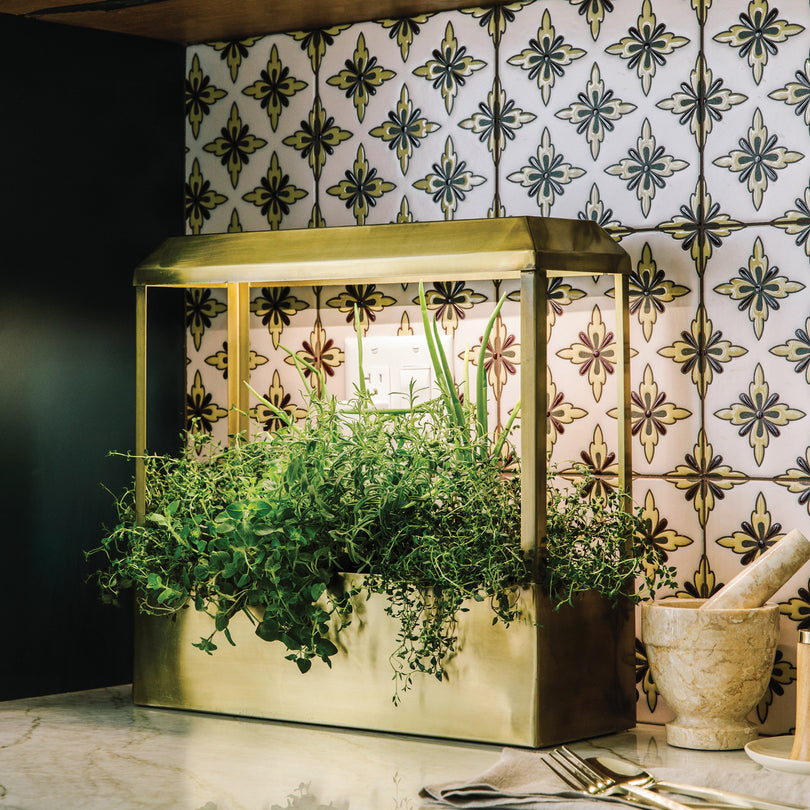
As an example of that last type, the Smart Growhouse pairs a full-spectrum LED with a watertight built-in planter, so the light and the growing space come as one unit rather than a setup you assemble piece by piece. It’s one way to skip the guesswork on light distance and run-time, though plenty of growers do fine with a simple clip-on over a windowsill pot.

Containers, Soil, and Drainage
Of everything in a pot, drainage matters most. Root rot, the slow suffocation of roots sitting in waterlogged soil, is a leading cause of indoor herb death. A container needs drainage holes so excess water escapes, plus a saucer underneath to catch it.
Size the pot to the herb. Most herbs are happy in a 6-inch or deeper container, while vigorous growers like basil and parsley prefer something closer to 12 inches so their roots aren’t cramped. Cramped roots dry out fast and demand constant watering. Terra cotta breathes and dries quicker; glazed ceramic and plastic hold moisture longer.
Use a well-draining potting mix, not garden soil. Garden soil is too heavy for containers and can bring pests indoors. A good mix balances drainage with moisture retention, and a handful of perlite worked in improves airflow around the roots.
There’s also a soil-free path. Hydroponic systems grow herbs in nutrient-rich water instead of dirt, which means no soil mess and no overwatering guesswork, traded against a higher upfront cost.
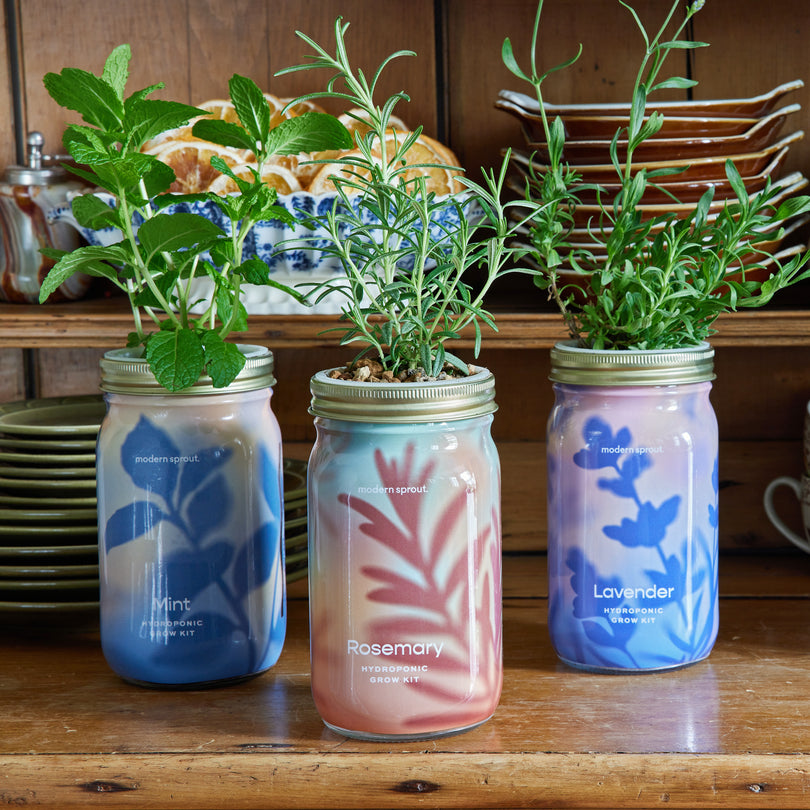
The New Garden Jars are an immersion-hydroponic herb kit along these lines, using certified organic seeds and delivering up to 6 months of fresh herbs without soil to manage. You can explore the format more in our hydroponic grow kits.
Watering, Humidity, and Airflow
More indoor herbs die from too much water than too little. The fix is to water by checking, not by calendar, and to keep an eye on the air around your plants.
Watering Without Overdoing It
Skip the fixed schedule. Instead, check before you water: push a finger an inch into the soil, and only water if it’s dry at your fingertip. Herbs like their soil to dry out a bit between waterings, with mint the thirsty exception.
Learning to read the plant helps. Overwatered herbs go yellow and limp with consistently soggy soil. Underwatered ones wilt and crisp with bone-dry soil. The soil check tells them apart before guessing does.
Container type and indoor heating both shift how often you water. Terra cotta and a running furnace dry soil faster, so you’ll water more often in winter than the season suggests.
For travel gaps or chronic over- and under-waterers, a slow-release tool like our Terracotta Watering Bulbs releases water gradually over about 7 days, smoothing out the swings. You can browse more options in our indoor plant care collection.
Humidity and Air Circulation
Indoor air gets dry, especially in winter when heating runs. That dryness stresses herbs that prefer a bit of moisture in the air. Grouping plants together raises local humidity, and a tray of water and pebbles beneath the pots helps too. Go easy on misting, since damp leaves on herbs like rosemary invite mildew.
Air circulation does quiet work. A little airflow strengthens stems and discourages mold and leggy growth. A small fan on low, or simply an open, un-stuffy spot, is enough.
Feeding and Ongoing Maintenance
Indoor herbs need less feeding than outdoor ones. A diluted, half-strength liquid fertilizer every few weeks during active growth is plenty, and herbs are actually more aromatic on a lean diet, so resist the urge to overfeed. Skip feeding in winter when growth slows.
Watch for signs an herb has outgrown its pot. Roots circling the surface or poking through drainage holes mean it’s root-bound and ready to move up a size. Repotting refreshes the soil and gives roots room.
Pests show up indoors too. Fungus gnats, aphids, and spider mites are the usual suspects. Start with the gentlest fix: rinse the plant, let soil dry to deter gnats, and use insecticidal soap only if the problem persists.
Harvesting Herbs for Continuous Growth
Harvesting isn’t just picking dinner. Done right, it’s pruning that pushes the plant to grow bushier and produce more. The trick is technique.
Pinch or snip just above a leaf node, the point on a stem where leaves branch out. Cutting there signals the plant to send out two new stems below the cut, so regular harvesting makes herbs fuller, not balder. Never take more than about a third of the plant at once, so it keeps the energy to bounce back.
For clean cuts that don’t crush stems, a pair of needle-nose pruning shears is the right tool for herb harvesting, since the fine tip gets into tight growth without bruising the plant. Snipping often is what keeps a single plant productive for months.
For more on stretching your harvest, our guide on making the most of your herbs goes deeper.
When an herb tries to flower, or bolt, pinch off the buds to keep its energy in the leaves. Basil especially turns bitter once it flowers, so stay ahead of it.
Troubleshooting Common Indoor Herb Problems
Most indoor herb trouble has a clear cause and a simple fix. Here’s how to read the common symptoms.
-
Leggy, stretching stems: not enough light. Move the plant closer to a sunny window or add a grow light.
-
Yellowing leaves: usually overwatering, sometimes a nutrient gap. Check the soil moisture first before reaching for fertilizer.
-
Wilting despite moist soil: a drainage problem, likely root rot. Check that the pot drains and let the soil dry out.
-
Slow or stalled growth: low light, cold, or root-bound. Brighten the spot, move it off a cold sill, or size up the pot.
-
Bitter or bolting basil and cilantro: heat and flowering. Pinch the buds and keep these two out of hot spots.
When two symptoms overlap, start with light and watering. They’re behind the large majority of indoor herb problems.
Year-Round Indoor Herb Growing by Season
The “year-round” promise comes down to adjusting for the season rather than learning anything new. Each season nudges the same dials you’ve already met.
In winter, light is the limiter. Lean on a grow light, water less often as growth slows, and watch for dry-air stress from the heating. In summer, longer days give more natural light, but heat can push basil and cilantro to bolt, so harvest often and keep them cool.
Staggering your planting keeps the supply steady. Start a new basil plant every few weeks and you’ll always have one coming into its prime as another winds down. That rhythm, more than any single trick, is what makes an indoor herb garden feel genuinely year-round.
Where to Start
Pick one or two herbs you actually cook with, give them the brightest spot you have, and water by checking the soil rather than the calendar. That’s the whole foundation.
Light is the variable worth getting right first, since it carries the most weight, and a grow light removes the seasonal guesswork if your windows fall short.
From there, harvesting often keeps each plant producing, and staggered planting keeps the kitchen stocked. Start small, learn how one plant behaves, and the rest of the windowsill follows.

