

Most houseplant trouble traces back to a handful of things you can actually control: water, light, humidity, soil, and how closely you're paying attention. A drooping pothos or a crispy fern rarely means you have a black thumb. It usually means one of those five variables drifted, and you didn't have the right tool to catch it.
That's the lens for this guide. We're not rounding up every gadget that exists. We're building a practical toolkit, one tool at a time, and the test for each is simple: does it solve a problem you keep running into?
If you're stocking a kit from scratch, our plant care and accessories collection is a good place to see what's out there before you commit.

How to Decide Which Tools You Actually Need
Before you buy anything, run a tool through three questions. Does it solve a recurring failure point, like plants dying from overwatering? Does it take guesswork out of a decision you keep getting wrong? Does it save time or make your care more consistent? If a tool clears all three, it earns a spot. If it only does one, it's probably a nice-to-have.
It also helps to map your actual problems to tool categories. Chronic overwatering points you toward a moisture meter or a reservoir system. Leggy, stretching growth points to a light problem. Crispy leaf tips in winter suggest dry air. A sudden cloud of tiny flies means it's time for pest monitoring.
Your space changes the priorities too. A north-facing apartment in a dry climate has different needs than a house full of bright south-facing windows. Someone with three plants needs a different kit than someone with thirty. Keep your own setup in mind as you read, because the best tools for houseplants are the ones that fix your problems, not someone else's.
One more distinction worth holding onto. Beginner-essential tools solve the problems almost everyone hits early, like watering and light. Specialized tools only start to matter once you scale up or get into fussier plants. We'll flag which is which as we go.
Watering Tools and Moisture Control
Watering is where most plants live or die, so this is the category to get right first. The goal isn't fancy equipment. It's matching how you deliver water, and how you check it, to what your plants actually need.

Watering Cans and Precision Waterers
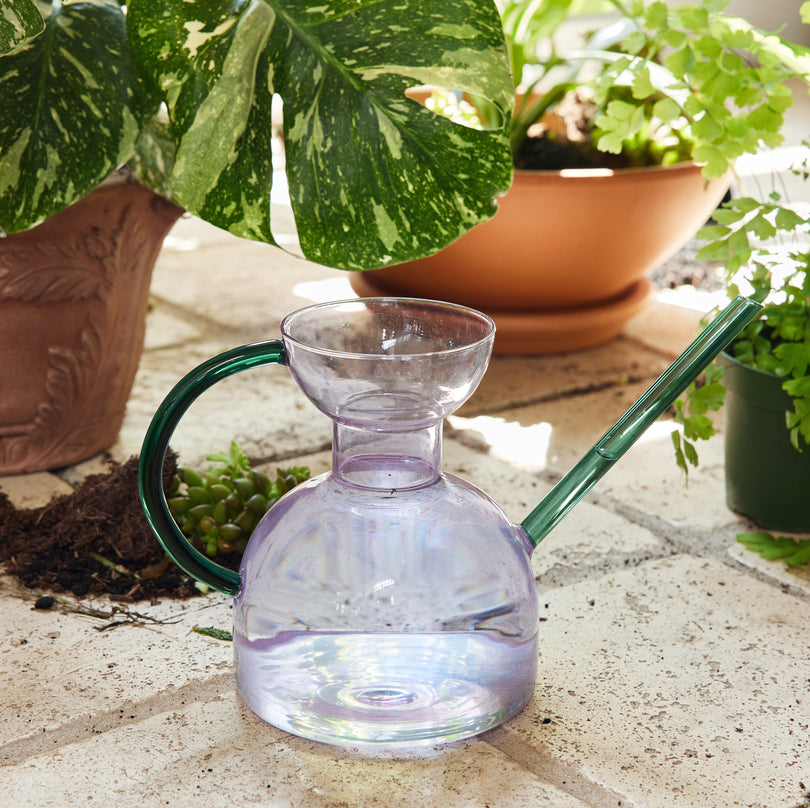
A good watering can does one job well: it delivers water to the soil without making a mess of the foliage. For indoor plants packed onto a shelf, spout shape matters more than capacity. A long, narrow gooseneck spout reaches between dense leaves and into tight corners, so you can water the crown of the plant at the base instead of soaking the leaves from above.
Watering at the base keeps foliage dry, which matters because wet leaves, especially with poor airflow, can increase the risk of fungal problems. A well-designed watering can with a slim spout handles most indoor setups.
For plants that prefer to drink from below, like African violets, bottom-watering in a shallow tray lets the soil wick up moisture through the drainage holes without wetting the crown at all.

Moisture Meters and Soil Probes
Overwatering is the single most common way houseplants die, and it usually happens because we water on a schedule instead of checking the soil. A moisture meter, or soil probe, takes the guesswork out of watering by reading how wet the soil is down at the root zone, where your finger can't reliably reach.
Our 4-in-1 soil tester reads moisture along with pH, light, and temperature, which makes it a useful single tool for diagnosing more than just watering. Be honest about the limits, though. Cheap probes can drift over time, and salt buildup in the soil can throw off the reading.
For small pots, your finger pushed two knuckles deep is still a perfectly good check. The meter earns its keep on larger or deeper pots where feeling the root zone isn't practical.

Self-Watering Systems and Reservoirs
If you travel, forget to water, or just want steadier moisture, a reservoir system can help. The idea is simple. Water sits in a reservoir and releases gradually as the soil dries, so the plant draws what it needs instead of getting a flood once a week.
Terracotta watering bulbs work on exactly this principle. You fill the glazed terracotta body, top it with the cork, and insert it into the soil. The porous clay releases water slowly as the surrounding soil dries, drawing on an old irrigation method, and a single bulb covers roughly seven days for a small to medium plant. It's a reservoir mechanism in a form that looks good on a shelf.
The trade-off is control. Reservoir systems shine for thirsty plants and consistent drinkers, but they're a poor match for succulents and cacti that want their soil to dry out completely between waterings. For those, steady moisture is the problem, not the solution.
Lighting Tools for Indoor Growth
After water, light is the next thing that quietly sabotages indoor plants. A plant stretching toward the window with pale, widely spaced leaves is telling you it's not getting enough. The fix starts not with buying a light, but with measuring the light you already have.
Reading Your Light Before Buying Anything
Light meters, and the free lux or PPFD apps on your phone, let you measure how bright a spot actually is before you spend a cent on equipment. PPFD is just a measure of how much usable light reaches your plant.
Measuring first tells you whether a windowsill is genuinely bright or only feels that way, which keeps you from over-buying a grow light you don't need or under-lighting a plant that's struggling.

Grow Lights
When a spot truly lacks light, a grow light fills the gap, but not every bulb qualifies. A regular lightbulb throws off the wrong slice of the spectrum for plant growth. A full-spectrum grow light delivers the range plants actually use to photosynthesize. The specs worth understanding are spectrum (full-spectrum is the safe default), intensity (higher PPFD for sun-loving plants), coverage area, and run time.
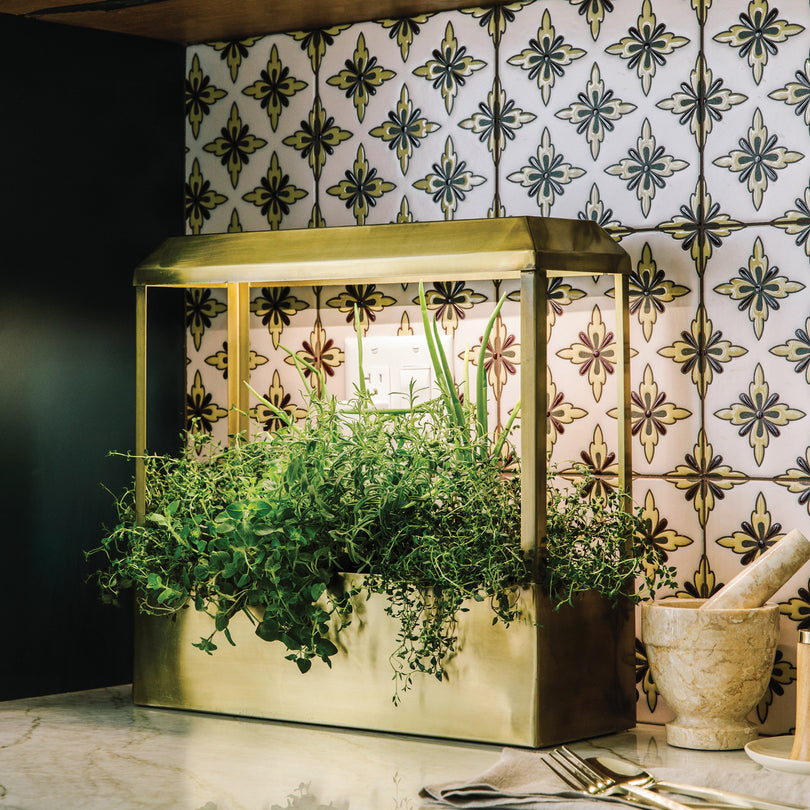
Form factor is where you match the light to your setup, and this is where reading the spec sheet pays off. For a single shelf or a bookcase, Modern Sprout's Smart Growbar is a low-profile fixture that mounts flush under a shelf and turns that surface into a growing spot.
For a larger wall display, the Smart Growframe pairs a full-spectrum LED with a mounted shelf you set your own planters on, so the light and the display live in one fixture. Both connect to an app for scheduling and brightness, which leads to the cheapest lighting upgrade of all.
A simple timer or smart plug keeps your lights on a consistent schedule without you remembering to flip a switch. Consistency is most of what plants want from light, and automating it removes the main point of failure: you.
Browse the full grow lights range to match a fixture to your space.
Humidity and Climate Tools
Humidity matters, but less universally than the internet suggests. Most common houseplants do fine in normal household air. The plants that genuinely struggle are tropicals during winter, when indoor heating dries the air out.
Start by measuring. A hygrometer reads your actual ambient humidity, so you know whether you have a real problem or an imagined one. Tropical plants tend to want humidity in the 50 to 60 percent range, and if your reading is well below that in winter, a tool can help.
On effectiveness, be clear-eyed. Misting feels productive but barely moves ambient humidity, and the effect fades within minutes.
A cool-mist humidifier does the real work for a room of tropicals. Grouping plants together raises local humidity modestly, and a pebble tray helps a little for a single plant. If you only own tropicals and live somewhere dry, a humidifier is worth it. For a pothos and a snake plant, it's overkill.
Soil, Repotting, and Maintenance Tools
This category covers the hands-on work of keeping plants potted, pruned, and clean. You don't need much, but the few right tools make these jobs faster and less messy.
1) Potting and Repotting Tools
Full-size garden tools are oversized for indoor work. A standard trowel won't fit inside a six-inch pot, which is the whole reason small-space gardening calls for smaller hardware. A soil scoop sized for containers moves potting mix into tight pots without spilling half of it on the table, and a repotting mat keeps the mess contained to one washable surface.
Pots themselves function as a tool decision. Drainage holes are the difference between healthy roots and root rot, because standing water at the bottom of a pot suffocates roots and invites rot. Material matters too.
Terracotta breathes and pulls moisture from the soil, which suits plants that like to dry out. Glazed ceramic and plastic hold moisture longer, which suits thirstier plants. If a decorative pot has no drainage hole, treat it as a cache-pot and keep the plant in a plain nursery pot inside it.
2) Pruning and Grooming Tools
Here's where naming the right tool matters. Modern Sprout's gardening shears and pruners are one product with two distinct blade styles, and they do different jobs.
-
The shears have a needle-nose tip built for snipping and harvesting, which makes them the right choice for indoor work: grooming houseplants, trimming delicate stems, harvesting herbs, and deadheading.
-
The pruners use a bypass blade that cuts branches and limbs up to half an inch thick, which is more cutting power than most houseplants ever call for.
-
For indoor grooming, reach for the shears. The reason to keep any cutting tool clean and sharp is the same indoors as out. A clean blade makes a clean cut that heals fast, and wiping the blade between plants keeps you from spreading disease or pests from one pot to the next.
-
Don't overlook leaf cleaning. Dust settles on leaves and physically blocks the light a plant needs to photosynthesize, so wiping broad leaves with a soft, damp microfiber cloth is a small habit with a real payoff. A soft brush handles fuzzy-leaved plants that don't take well to water.
3) Pest Monitoring and Treatment Tools
The best pest strategy is catching problems early, which makes monitoring more valuable than any treatment. A small loupe or magnifier lets you spot mites and eggs before they become an infestation, and sticky traps catch fungus gnats and flag a problem the moment it starts, well before you'd notice the bugs yourself.
Treatment basics round out the kit. A spray bottle for applying neem oil or insecticidal soap, plus the habit of isolating a new or infested plant away from the others, handles most common pests. Think of this as a monitoring system, not a shelf of products. Early detection usually makes treatment much easier.
Building Your Practical Toolkit
Tie it all together by buying for the problem in front of you, not the problem you might have someday. A starter kit covers the essentials almost everyone needs: a watering can with a narrow spout, a way to read your light, and a pair of shears for grooming. That handles the daily work of keeping plants alive and tidy.
An expanded kit comes later, as you add plants or notice specific failures. A moisture meter once you have deep pots you can't read by finger. A grow light once you've measured a dim corner and confirmed it needs help. Humidity tools once you've committed to tropicals. The Gardener's Toolshed is a good place to fill in those gaps as they appear.
Where do integrated systems fit? App-connected fixtures like the Growbar and Growframe suit low-maintenance growers who want lighting handled automatically, while hands-on hobbyists who like to fine-tune everything may prefer separate components they can swap. Neither is more correct. It depends on how involved you want to be.
Where to Start
Buy for the variable you're currently fighting. If your plants keep dying wet, start with moisture control. If they're stretching and pale, start with light. If the air is bone-dry and your tropicals are crisping, start with a hygrometer and decide from there.
The best tools for houseplants aren't the ones with the most features. They're the ones that fix the problem you keep having, and they tend to be simple: a narrow spout, a clean blade, a way to measure what you can't see. Build the kit around your plants and your space, add to it when a real need surfaces, and you'll spend less and grow more.

