

A plant is one of the most thoughtful gifts a teacher can unwrap. Unlike cut flowers, it's still on the desk in December, and unlike another mug, it makes the room better every day it's there.
The catch: classrooms are hard on plants. This guide covers the picks that handle it, plus the teacher gifts that round them out.
The Best Plant Gifts for Teachers
The short answer: snake plant, ZZ plant, pothos, succulents, and air plants, plus a peace lily if the room has decent light. Every one of these is low-maintenance enough for a busy teacher and forgiving enough for a classroom.
Why those six? A classroom is a specific, unforgiving home for a plant. Many rooms run on fluorescent light. Nobody waters over the weekend. Winter break lasts two weeks and summer lasts two months.
So “best” here means the plant most likely to be alive at the end of the school year. Pick the room and the teacher's habits first, and look second. The rest of this guide shows you how.
What Makes a Plant Classroom-Proof
Before comparing individual plants, it helps to know what you're screening for. Five traits separate the survivors from the casualties.
1) Tolerates Low or Artificial Light
Plenty of classrooms have small north-facing windows or none at all, so the plant may live entirely under fluorescents. Some species keep photosynthesizing in low light or bright indirect light. Sun-lovers stall, stretch, and fade in the same spot.
One distinction does most of the screening work: a plant that tolerates low light survives it, while a plant that needs bright light declines in anything less. Tolerance is the trait you're shopping for.
2) Forgives Missed Watering and Long Breaks
This is the real failure mode. The plant doesn't die from bad care. It dies from no care over a long weekend, a two-week winter break, or the summer.
Prioritize plants that store water in their leaves or roots, like succulents, ZZ plants, and snake plants, or that visibly droop when thirsty.
You can also buy a buffer: our terracotta watering bulbs release water slowly into the soil and cover about a week, enough for a long weekend or a short break.
3) Safe Around Kids
Toxicity matters most in elementary rooms, where plants sit within reach of curious hands. Several popular picks, including pothos, peace lily, and ZZ plant, contain insoluble calcium oxalate crystals that irritate the mouth and stomach when chewed, according to the ASPCA's guide to troublesome houseplants.
That doesn't rule them out. It means placing them on a high shelf in younger classrooms, or choosing a non-toxic pick instead.
Our pet-friendly plant recommendations cover the same safe species, since kid-safe and pet-safe lists overlap almost completely. Skip heavily scented or flowering options if allergies are a concern.
4) Fits a Desk or Shelf Footprint
Surface space in a classroom is spoken for. A teacher's desk holds papers, a document camera, and thirty other things before a plant arrives.
Favor compact, slow-growing picks over anything that sprawls or needs staking. A small pot on a windowsill or bookshelf beats a floor plant that blocks a walkway.
5) Shrugs Off Neglect and Handling
Classroom plants get bumped, poked, and occasionally used as a science exhibit. Hardiness against handling and inconsistent care is the whole point of the gift. A plant that sulks after one missed watering isn't a gift. It's a chore with leaves.
The Best Classroom Plants, Compared
Here's how the top picks stack up against those five traits. Browse the full live plants collection to see what's in stock, then use the profiles below to match a plant to the room.
|
Plant |
Light |
Watering |
Kid/pet-safe |
Size |
|
Snake plant |
Low to bright |
Every 2 to 3 weeks |
Mildly toxic |
Compact, upright |
|
ZZ plant |
Low to bright indirect |
Every 2 to 3 weeks |
Toxic if ingested |
Compact |
|
Pothos |
Low to bright indirect |
Weekly-ish, forgiving |
Mildly toxic |
Trailing |
|
Succulents and cacti |
Bright, direct |
Every 2 to 4 weeks |
Mostly safe; spines |
Mini |
|
Air plants |
Bright indirect |
Soak every 1 to 3 weeks |
Non-toxic |
Tiny |
|
Peace lily |
Low to medium |
Weekly, wilts when dry |
Toxic if ingested |
Medium |
Snake Plant (Sansevieria)
The default “can't kill it” pick. A snake plant handles low light, and its thick, water-storing leaves go weeks between waterings. Our Snake Plant 'Black Gold' also propagates easily from leaf cuttings, a fun bonus for a science-minded teacher.
The honest caveat: it's mildly toxic if ingested, so it belongs on a shelf rather than a kindergarten windowsill.
ZZ Plant (Zamioculcas)
The ZZ plant stores water in underground rhizomes, which are thickened stems that act like reservoirs. That's how it rides out long dry spells and low light while staying glossy and compact.
All parts are poisonous if ingested, so this one suits middle and high school rooms, or a high shelf anywhere else.
Pothos
Pothos is the forgiving trailing vine on every easy-care list. It tolerates low light, shrugs off an irregular watering schedule, and roots readily from cuttings, so a teacher can turn one plant into a windowsill propagation project. It's mildly toxic if chewed, the same oxalate caveat as the peace lily below.
Succulents and Small Cacti
For pure break-proofing, nothing beats succulents like Echeveria and Haworthia. Their rosette-shaped leaves store enough water to wait out weeks of neglect.
The trade-off is light. Succulents need the brightest spot in the room, ideally a sunny windowsill, and a windowless classroom will slowly starve them. Cacti add a handling caveat around younger kids for obvious reasons.

Air Plants (Tillandsia)
No soil, no pot required, and a footprint smaller than a sticky note. Air plants only need a soak every one to three weeks and decent bright indirect light. A set like our three tiny air plants with mini terracotta pots suits the teacher with zero spare surface space. They're also non-toxic, which simplifies the elementary-room question.
Peace Lily
The peace lily (Spathiphyllum) is the one flowering pick that tolerates lower light, and it wilts visibly when thirsty, a built-in watering reminder. It does need more consistent water than the rest of this list, so it fits a teacher who's in the room daily.
It's also toxic if ingested. Poison Control confirms that chewing a leaf causes immediate mouth and throat irritation, though most minor ingestions by kids can be managed at home. Keep it well out of reach in younger classrooms.
Matching the Gift to the Teacher and the Room
Start with the room. A windowless or fluorescent-lit classroom points to a snake plant, ZZ, or pothos. A bright windowsill opens the door to succulents and cacti. A crowded desk calls for an air plant or a mini succulent.
Then consider the grade level. Elementary rooms reward non-toxic, reach-safe picks like air plants and most succulents. In middle and high school, toxicity matters less and display freedom grows.
Finally, factor in the teacher's habits. Someone forgetful or frequently away needs the hardiest pick plus a watering buffer.
A hands-on plant lover will enjoy a peace lily or a propagation-friendly pothos, and our gift guide for indoor plant parents has more ideas for that teacher. So does the gifts for indoor plant parents collection, which sorts by budget.
Gift-Ready Upgrades Beyond the Plant Itself
A few affordable extras turn a plant into a finished, gift-ready package and raise its survival odds at the same time.
-
Watering bulbs, mentioned above, cover roughly a week of absence for under $20.
-
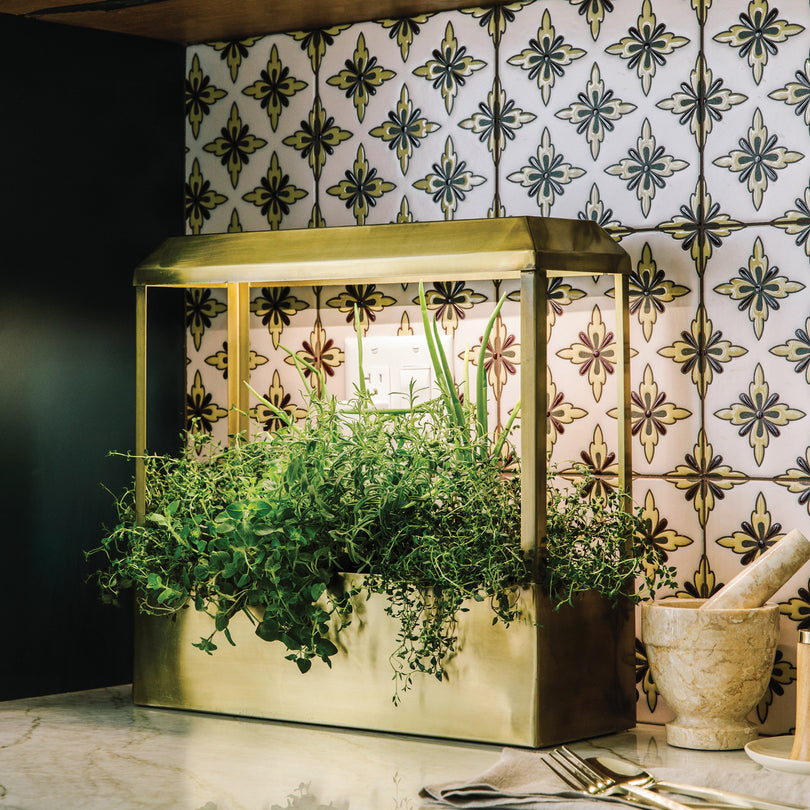
For a windowless room, the Smart Growbar we built solves the light problem outright: it's a full-spectrum LED with stick-and-go mounting, no drilling required, which matters when teachers can't modify the room. There's a manual on/off switch, so it works even on locked-down school wifi.
-
A decorative terracotta pot or ceramic pot dresses up a nursery-grown plant.
-
A handwritten care card (more on that below) is free and does real work.
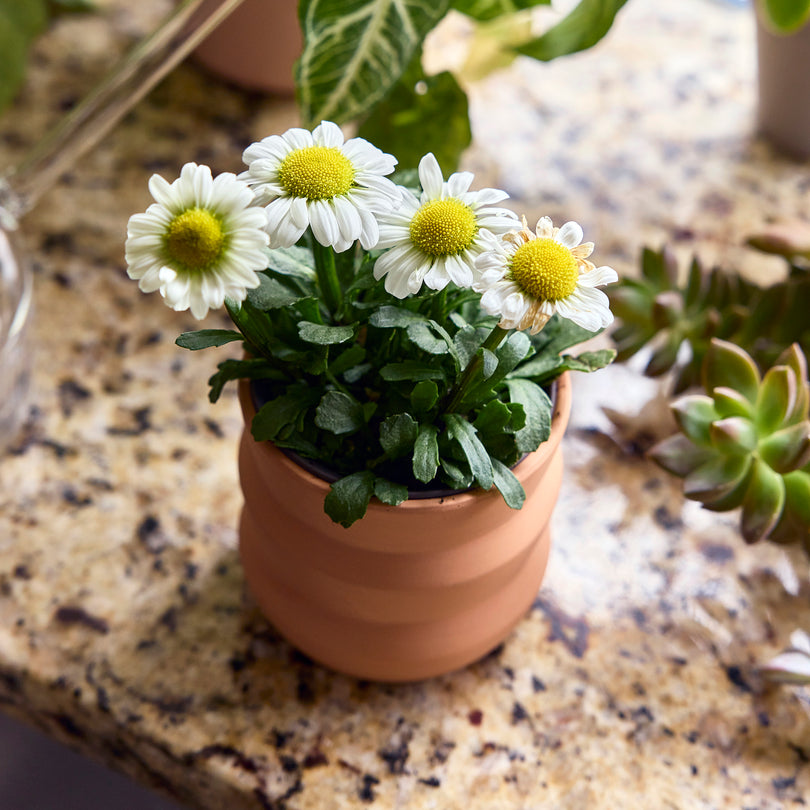
If you'd rather give something the teacher takes home, our Tiny Terracotta Kits include a Thank You Daisies variant made for teacher appreciation.
Fair warning: it needs direct sun, so it's a bright-windowsill or take-home gift rather than a classroom one. And if the teacher already loves plants, the best tools for houseplants make a practical bundle pairing.
Helping the Gift Survive the School Year
Long breaks are the gift's biggest test. For winter break, a watering bulb or a deep pre-break soak carries most picks through. For summer, the honest answer is choosing a plant that simply waits it out: ZZ, snake plant, or succulents will sit dormant until August.
Include a one-line care card so the teacher never has to guess. Something like: “Bright-ish spot, water when the soil is dry, and when in doubt, underwater.” Overwatering kills more classroom plants than neglect does. Add a “thanks for helping me grow” tag and the personalization writes itself.
Timing is flexible. Back to school puts the plant in place for the whole year, while Teacher Appreciation Week or an end-of-the-school-year gift lands when gratitude peaks. If you don't know the room's conditions, default to the hardiest pick on the list.
The Plant That's Still Thriving in June
A teacher gift succeeds if it's alive when report cards go out. Screen for low-light tolerance, watering forgiveness, kid safety, and a small footprint, and the six plants above all clear the bar somewhere.
When in doubt, give a snake plant or ZZ with a care card and a watering bulb. That combination survives nearly any room, any grade, and any schedule, and it shows appreciation every day it keeps growing.

