

Lavender has a reputation for being difficult to start from seed, and we'll level with you: the reputation is earned. Germination is slow and uneven, and it looks nothing like the basil packet that sprouts in five days flat.
It's still one of the most satisfying projects in seed starting. One packet can grow an entire hedge for the price of a single nursery plant, and seed opens up varieties most garden centers never stock. Here's how to do it right the first time.

Growing Lavender From Seed: What to Expect
Set your expectations before you set your seeds. A typical lavender packet germinates at 30-60%, while most kitchen herbs land above 90%. Sprouting takes 2-4 weeks, seedlings need 8-12 weeks to reach transplant size, and meaningful flowers usually wait until the second summer.
The case for bothering is cost and choice. Seed is dramatically cheaper per plant if you want a border or hedge, and it gives you access to cultivars nurseries rarely carry.
One trade-off to know up front: seed-grown lavender doesn't come true to type the way cuttings do. A cutting is a clone of its parent. Seed carries some variation in height, color, and habit. Varieties like Munstead and Hidcote are seed-stable, while most named hybrids are not.
Which Lavender Varieties Grow Well From Seed
Variety choice matters more here than with almost any other herb, because the species differ in seed viability, not just looks.
English lavender (Lavandula angustifolia) is the most seed-reliable and the hardiest, comfortable in USDA zones 5-9. French and Spanish types (Lavandula stoechas) germinate faster but shiver below zone 8. Lavandin (Lavandula x intermedia, including Grosso and Provence) is a sterile hybrid, so it can't be grown from seed at all. That last one trips up a lot of first-timers who fall for a Provence photo.
For seed-stable cultivars, we like a short list:
-
Munstead: compact, earliest to bloom, and the most forgiving pick for a first attempt
-
Hidcote, if you want that deep violet color and can wait a little longer
-
Vera (sometimes sold as True) for culinary use
-
Lavender Lady, the rare variety that can flower in year one from an early sow
Run a quick zone reality check before buying. English lavender handles zones 5-9; French wants 8 and up. If you're gardening in zone 4, don't abandon the project. Grow it in a container instead, and see our guide to gardening by the zones for how your zone shapes the calendar.
One more buying criterion: seed age. Lavender viability drops sharply after about a year, more than most herbs, so check the packet date like you'd check a milk carton.

When to Start Lavender Seeds
Here's the math that controls everything: count back 10-12 weeks from your last frost date, then add another 3-4 weeks for cold stratification. Most failed attempts started too late, not too early. For most of the US, that means sowing indoors in January or February.
You can also winter sow outdoors in fall and let nature handle the cold period. It's less effort and less control. Indoor starting gives higher, more predictable germination; outdoor fall sowing suits anyone who'd rather set it and forget it.
Can you just throw lavender seeds in the ground in spring? You can, and they'll almost certainly fail. Direct-sown seed washes away, gets buried below its light requirement, dries out, or sprouts straight into weed competition. Direct sowing is the weakest option by a wide margin.
|
Your zone |
Indoor sow window |
Outdoor winter sow |
|
Cold (5-6) |
Late January-February |
November-December |
|
Transitional (7) |
January |
November |
|
Warm (8-9) |
December-January |
October-November |
Cold Stratification: The Step Most Growers Skip
Lavender seed carries dormancy, a built-in pause that stops it from sprouting at the wrong time. Cold stratification is the fix: a stretch of cold, moist conditions that mimics winter and tells the seed it's safe to wake up. Skip it and you'll watch a tray do nothing for a month.
Three methods work:
-
The refrigerator paper-towel method. Spread seeds on a damp (never wet) paper towel, seal it in a plastic bag, and park it in the crisper drawer for 3-4 weeks. Label the bag with the date, because you will forget.
-
Sow, then chill. Sow directly into your tray, bag the whole tray, and refrigerate it. This one shines when you're starting large quantities and don't want to transfer sprouted seeds with tweezers.
-
Natural outdoor stratification. Sow in fall into a protected tray or a milk-jug winter sower and let the season do the chilling.
Each method fails the same few ways. Too wet, and mold takes over; wring that towel out. Too warm, and dormancy never breaks; the crisper drawer beats the door shelf. Too short, and you get partial germination. And seeds forgotten past six weeks may sprout in the bag, so set a reminder.
Is stratification mandatory? Not quite. Some suppliers pre-chill their seed, and some growers report decent germination from very fresh seed on a heat mat alone. Rates run consistently higher with stratification, though, and fresh seed matters at least as much. Do both and you've stacked the odds.
How to Sow Lavender Seeds Step by Step
Lavender seed is nearly microscopic, and it punishes heavy media. Six steps:
1. Start with the right mix
Use a sterile, fine-textured seed-starting mix. Standard potting soil compacts around seeds this tiny, and garden soil brings fungal spores that cause damping-off, the disease that makes new sprouts collapse at the soil line.
2. Prep shallow trays
Choose shallow trays or cell trays with real drainage, and pre-moisten the mix before you sow. Watering afterward washes surface-sown seed into oblivion.
3. Surface sow
Lavender seeds need light to germinate, so press them gently into the surface, or dust them with the thinnest possible layer of vermiculite. Burying them is the single most common cause of total failure.
4. Sow 2-3 seeds per cell
This hedges against that 30-60% germination rate. You'll thin the extras later.
5. Cover and keep warm
Cover the tray with a humidity dome or plastic wrap until sprouts appear, then remove it immediately. Aim for a soil temperature of 70-75°F. Ambient room temperature usually runs 5-10 degrees cooler than people assume, and a seedling heat mat closes that gap.
6. Water from below
Water from below or mist with a spray bottle. Pouring from above displaces seed and drowns sprouts.
Here's what the first month looks like, so you don't quit at day 10. Weeks one and two: nothing visible, which is normal. Week three: the first few green specks, arriving days apart rather than all at once. Week four: stragglers still emerging. Sprouts can trickle in for weeks, so keep the tray going.

Light and Warmth Requirements for Germination
Lavender wants 8 or more hours of bright light daily during germination, and 14-16 hours once seedlings emerge. That's a tall order in January.
A south-facing window usually can't deliver it. Short days and a low sun angle mean even your brightest sill produces leggy, stretched seedlings in midwinter. If you've ever wondered why windowsill seedlings flop while greenhouse ones stand up straight, our guide to how much light indoor plants actually need breaks down the numbers.
A grow light solves the winter shortfall. Position it an inch or two above the seedling canopy and raise it as they grow. Light parked too far away is the top cause of pale, leggy seedlings.
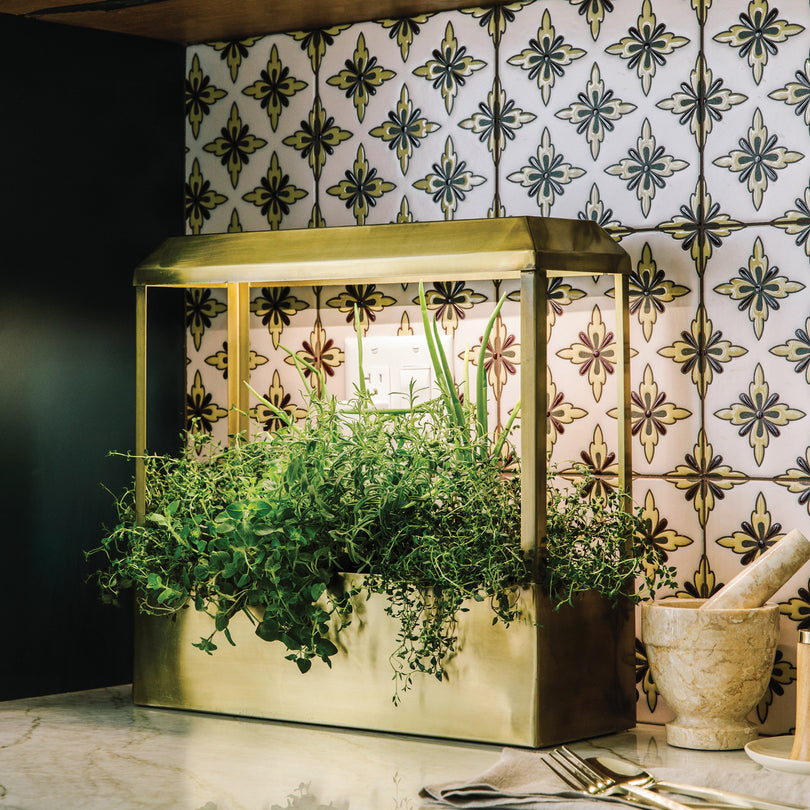
For context on how we approach this at home: systems like our Smart Growbar exist to hold light hours consistent on a schedule through that 4-week germination window, since day-to-day variation in light and moisture is what lavender seed is most sensitive to.
Caring for Lavender Seedlings
The riskiest moment comes right after success. Five care shifts:
1. Remove the dome and heat mat
Once about half your seeds have sprouted, pull both. Leaving them on is the top cause of seedling collapse, because trapped humidity plus warmth is a damping-off incubator.
2. Let the surface dry between waterings
Shift from constant surface moisture to letting the top of the mix dry out. Lavender's drought tolerance starts early, and overwatering kills far more seedlings than neglect ever will.
3. Add a gentle fan
A fan nearby builds stem strength and keeps fungal problems down. Think of it as a workout for baby plants.
4. Hold the fertilizer
Lavender developed on poor, rocky Mediterranean slopes, and lean soil produces better fragrance, flavor, and habit than a well-fed plant. Feeding it generously gets you floppy foliage and less scent, which is backwards from most herbs.
5. Pot up at two sets of true leaves
When each seedling shows two sets of true leaves (the adult-shaped leaves that follow the first round pair), pot up into 3-4 inch pots with a fast-draining mix. Before any move outdoors, harden off over 7-14 days of gradually longer outdoor exposure. For the general post-germination playbook, we covered the whole stage in I planted my seeds, now what.
Tally up what you've just read: a 3-4 week chill, surface sowing, 70-75°F, moisture that starts constant and then tapers, 14-16 light hours.
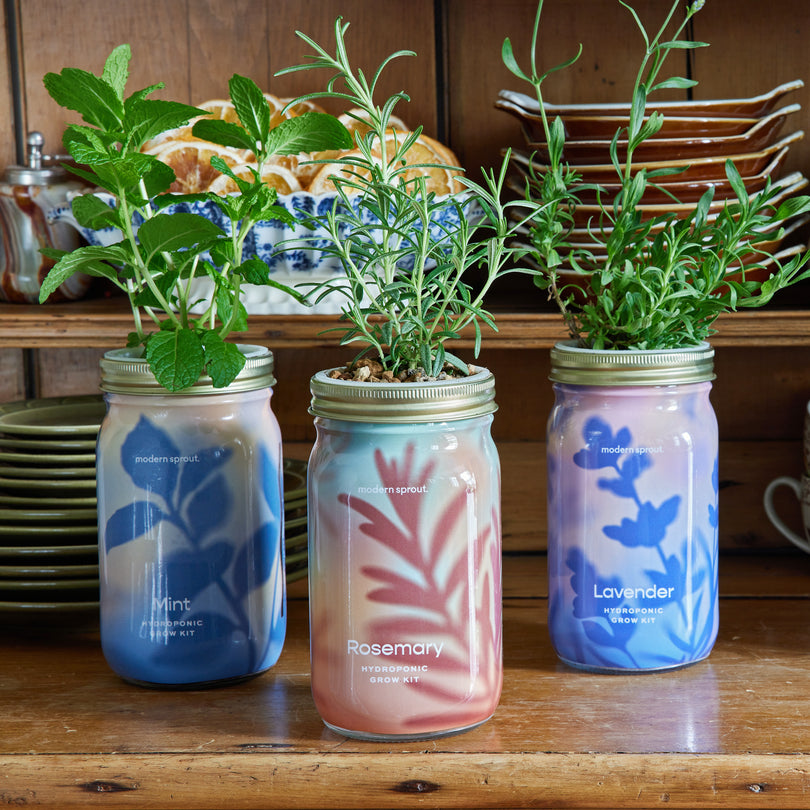
That's a lot of variables to babysit. If you'd rather hold the two hardest ones steady, the Lovely Lavender edition of our new Tiny Terracotta Grow Kits uses an immersion-hydroponic setup that delivers water to the roots from below, so surface-sown seed never gets flooded and the guesswork leaves the watering can.
It sits in our flower grow kits line, and the Thrive Promise covers you with replacement seeds if lavender's naturally variable germination doesn't cooperate.
Transplanting Lavender Outdoors
Move seedlings out after your last frost, once the soil has warmed and plants stand 3-4 inches tall with visible root development in the pot.
Pick the site like the plant's life depends on it, because it does. Lavender needs 6-8 hours of full sun and, above everything else, drainage. In heavy clay, plant on a raised bed or a mound 3-4 inches above grade, or amend generously with coarse grit. Wet feet mean root rot, the number-one lavender killer.
Check your pH while you're at it. Lavender prefers neutral to slightly alkaline soil, around 6.7-7.3, which makes it unusual among herbs. If your soil runs acidic, a dose of garden lime raises the pH. This is also why peat-heavy mixes work against you; peat is acidic.
Space plants 12-36 inches apart depending on the variety's mature size. Crowded lavender traps humidity and invites fungal trouble.
If the zone or soil is wrong, containers rescue the project. An unglazed terracotta pot with oversized drainage and a gritty mix mimics that rocky hillside beautifully, and you can move it to shelter in winter.
First-year care runs counter to lavender's reputation. Water more than you would a mature plant, skip heavy harvesting, and pinch off early flower buds so the plant spends its energy on roots. The patience pays out in the second summer.
Common Lavender Seed-Starting Problems
1) No germination after four weeks
Usually skipped or too-short stratification, seed buried too deep, seed past its one-year viability window, or soil below 70°F. Check each in that order, and give the tray up to three months before calling it. Lavender sprouts arrive on their own schedule.
2) Sprouts appear, then collapse
That's damping-off. The dome stayed on too long, watering ran heavy, or air wasn't moving. Pull the cover at 50% germination and add a fan.
3) Leggy, pale seedlings
The light is too weak or too far away. Bump to 14-16 hours and drop the fixture to an inch above the canopy.
4) Yellowing leaves
Overwatering or excess fertilizer is the usual cause. Underfeeding almost never causes this in lavender, so resist the urge to feed your way out.
5) Slow or stalled growth after transplant
Look at root disturbance during the move, acidic soil, or poor drainage, and fix the drainage first.
One more troubleshooting shorthand worth knowing: the "8 rule" for lavender. It's a grower shorthand for the plant's three non-negotiables. Eight hours of sun, eight inches of well-draining soil depth, and lean conditions. If a struggling plant is missing one of the three, you've found your diagnosis.
Seed vs. Cuttings vs. Nursery Plants
|
Factors |
Seed |
Cuttings |
Nursery plant |
|
Cost per plant |
Lowest at volume |
Free with a parent plant |
Highest |
|
Time to bloom |
Second summer |
Next season |
This season |
|
True to variety |
Variable |
Exact clone |
Exact |
|
Difficulty |
Highest |
Moderate |
Easiest |
|
Best for |
Hedges, borders, variety hunting |
Multiplying a favorite |
A single specimen now |
Seed wins on price and selection when you want many plants and can live with some variation. Cuttings are the standard route for lavandins and named hybrids, since a semi-hardwood cutting clones the parent exactly. A nursery plant flowers the fastest and costs the most.
An honest read on when to skip seed entirely: if you want one specimen of a specific named hybrid blooming this year, buy the nursery plant. Seed is a volume-and-patience play, and it's the wrong tool for that job.

Lavender Seed FAQs
Is lavender difficult to grow from seed?
It's the hardest common herb to start, mostly because of dormancy and slow, staggered germination. It isn't difficult once you know the three requirements: a cold stratification period, surface sowing in light, and 70-75°F soil.
How long does it take to grow lavender from seed?
Plan on 2-4 weeks to germinate after stratification, 8-12 weeks to transplant size, and the second summer for a real flower show. A few varieties, like Lavender Lady, can bloom their first year from an early sow.
Do lavender seeds need cold stratification?
Your odds are much better with it. Fresh seed sometimes germinates well without a chill, but 3-4 weeks of cold, moist stratification raises germination rates consistently enough that we treat it as standard.
Do you soak lavender seeds before planting?
No. Soaking doesn't break lavender's dormancy; cold does. A soak leaves you with wet, hard-to-handle seed and the same sleepy embryo inside.
How deep do you plant lavender seeds?
You don't. Press seeds onto the surface or dust them with a whisper of vermiculite, because they need light to germinate. Burying them is the most common cause of an empty tray.
Why aren't my lavender seeds germinating?
Most empty trays trace back to warmth, depth, age, or a skipped chill. Confirm the soil is holding 70°F or better, that seed sat on the surface rather than under it, and that the packet is less than a year old. If all three check out, be patient before replanting; germination can straggle in for months.
Can you grow lavender from seed indoors permanently?
Yes, with commitment. A mature plant indoors needs a grow light running long hours, an unglazed pot with sharp drainage, and restrained watering. Most growers find it easier to summer the pot outdoors and shelter it in winter.
Is it better to grow lavender from seed or cuttings?
Seed for quantity and variety hunting, cuttings for an exact copy of a plant you love. Cuttings are also the only route to lavandins like Grosso, since those hybrids are sterile.
What a Packet of Lavender Seed Buys You
Grow lavender from seed and you're trading speed for abundance: a slow first year, then more plants than you could reasonably buy, in varieties you chose on purpose. Stratify, surface sow, keep the light long and the water light, and let the second summer do the showing off.
And if there's a plant person on your gift list who'd love this project, our Rooted Candles in Lavender & Cedarwood tuck a lavender seed packet inside a ceramic vessel that becomes the planter once the wick burns down. The hedge starts with a single seed either way.

