

Why Potted Plants Need Feeding
Sunlight gives a plant energy. Nutrients give it material. Potting mix arrives with a finite supply of nitrogen, phosphorus and potassium, and a plant in a container draws on that supply with nowhere else to go. Watering carries some of it out through the drainage hole. Within a few months, most potted plants are living on noticeably less than they started with.
That shows up long before it looks like a crisis. Growth slows, new leaves come in smaller than the old ones, lower leaves yellow, and flowering plants set fewer buds. None of it means the plant is failing. It usually means the mix is spent.
Feeding is the correction. Nitrogen supports leaves and stems, phosphorus supports roots and blooms, and potassium supports the plant's general resilience. Our sheets carry a 6-9-17 analysis, which weights the formula toward roots and steady health rather than pushing fast leafy growth.
How Dissolving Plant Food Sheets Work
Most plant food is a liquid concentrate or a powder, and both ask you to measure. Measuring is the step people skip, and skipping it is how plants end up overfed or never fed at all.
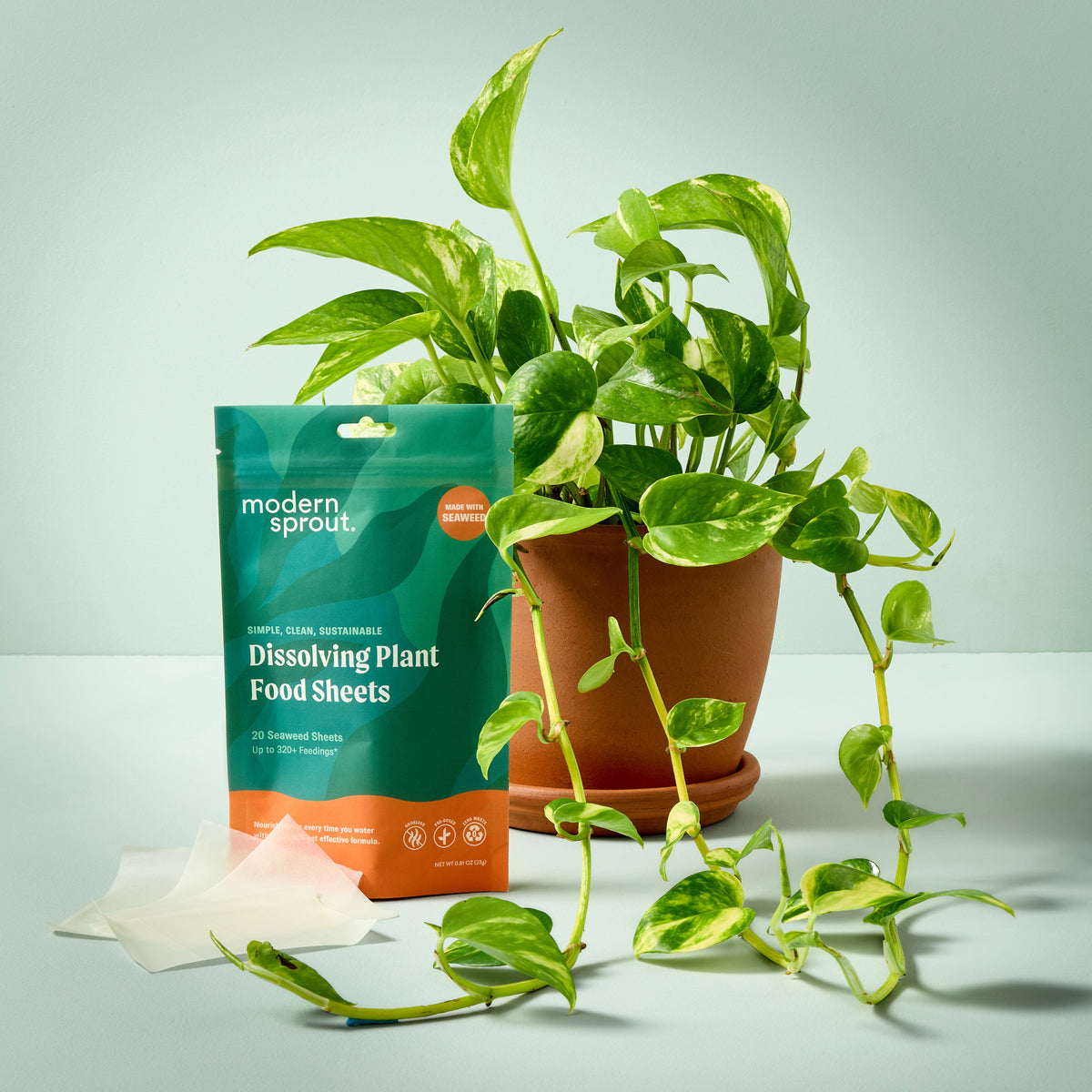
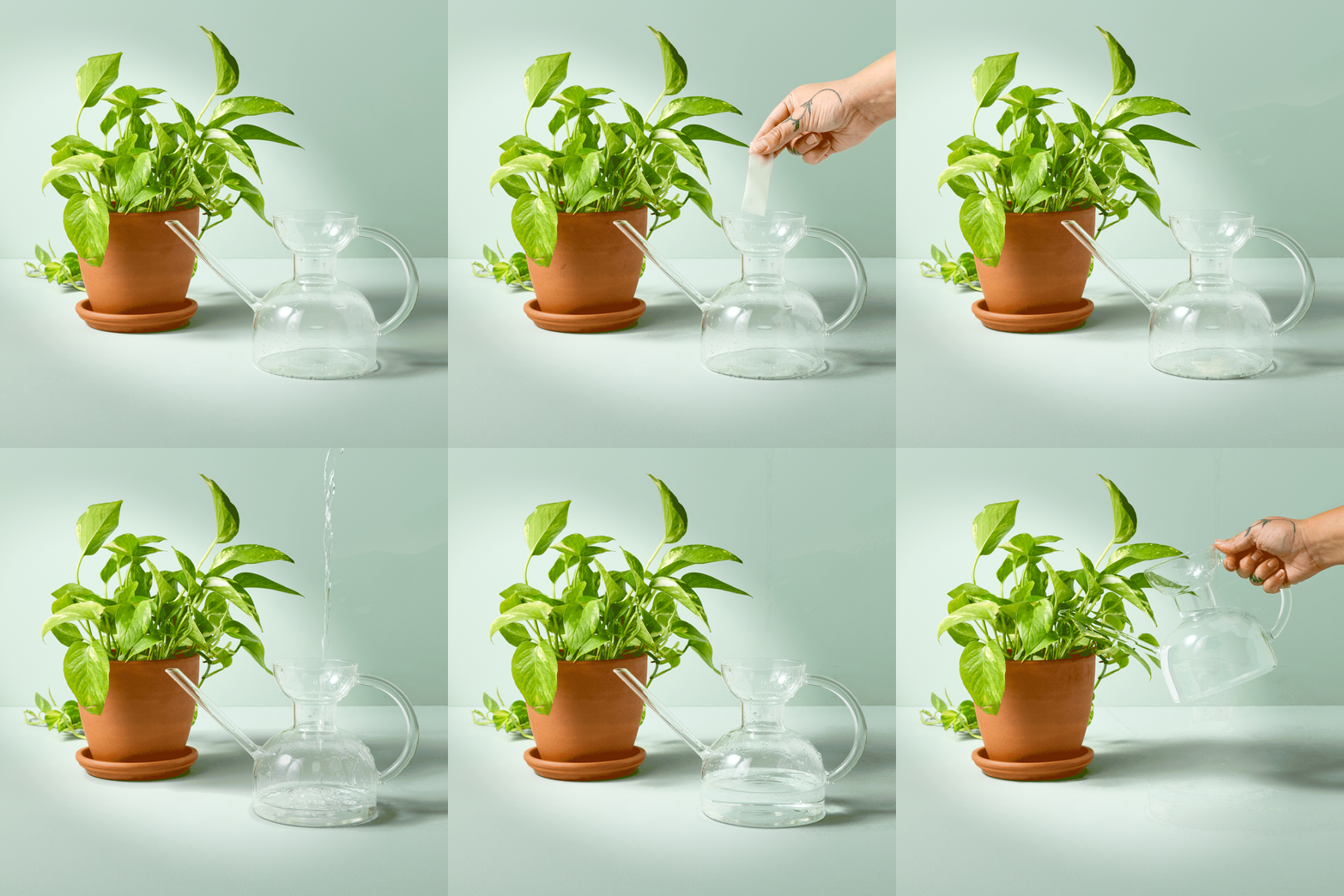
A sheet removes that step. Each Dissolving Plant Food Sheet is pre-dosed and perforated, so a full sheet feeds a gallon of water and a single strip feeds a quart. Drop it in, stir, and it dissolves in seconds with no odor and nothing settling in the bottom of the can.
The format does more than convenience work. The sheets are thinner than a piece of paper and carry no fillers and no plastic, which is how a flat pack of twenty replaces a bulky bottle while making the same twenty gallons of feed. The pouch is backyard compostable.
Seaweed Is the Delivery System
The sheet itself is made from seaweed. Sodium alginate from sugar kelp holds the nutrients in a film and dissolves cleanly in water, and the kelp is grown and harvested in Maine by Dirigo Sea Farm, a small woman-owned business.
Seaweed is a good material to build on. It grows without land, fresh water, chemicals or fertilizer of its own, and it captures carbon while it does. It also brings trace minerals and natural growth compounds that help a plant regulate what it takes up rather than just receiving a dose.
That last part is why the formula can be gentle enough for every watering instead of a monthly event you have to remember.
How to Use Plant Food Sheets
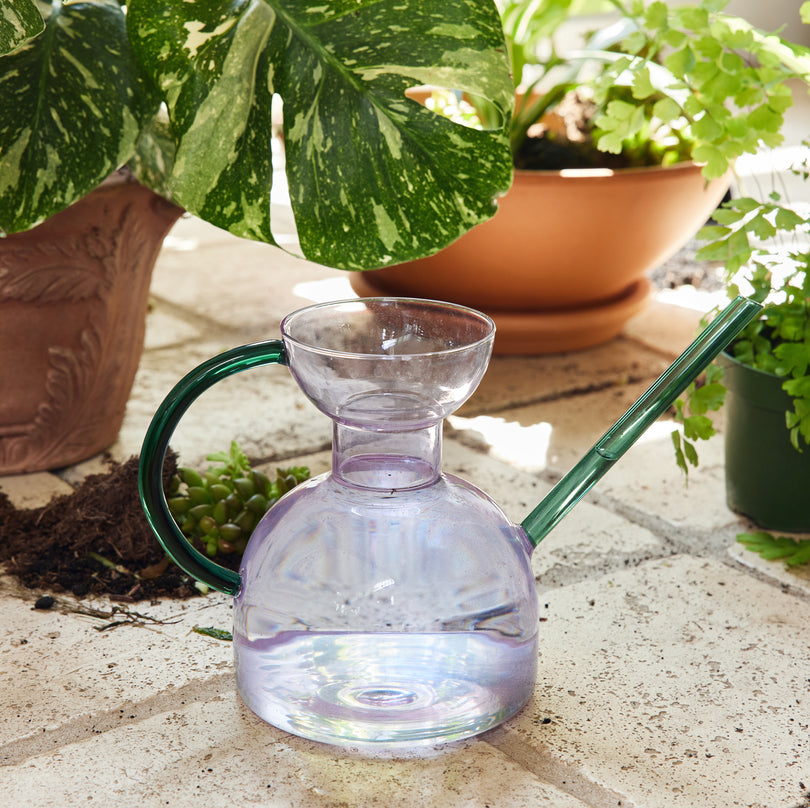
Add one sheet to your watering can, fill with a gallon of water, and stir until it dissolves. Water as you normally would. Repeat every one to two weeks, depending on your own watering rhythm.
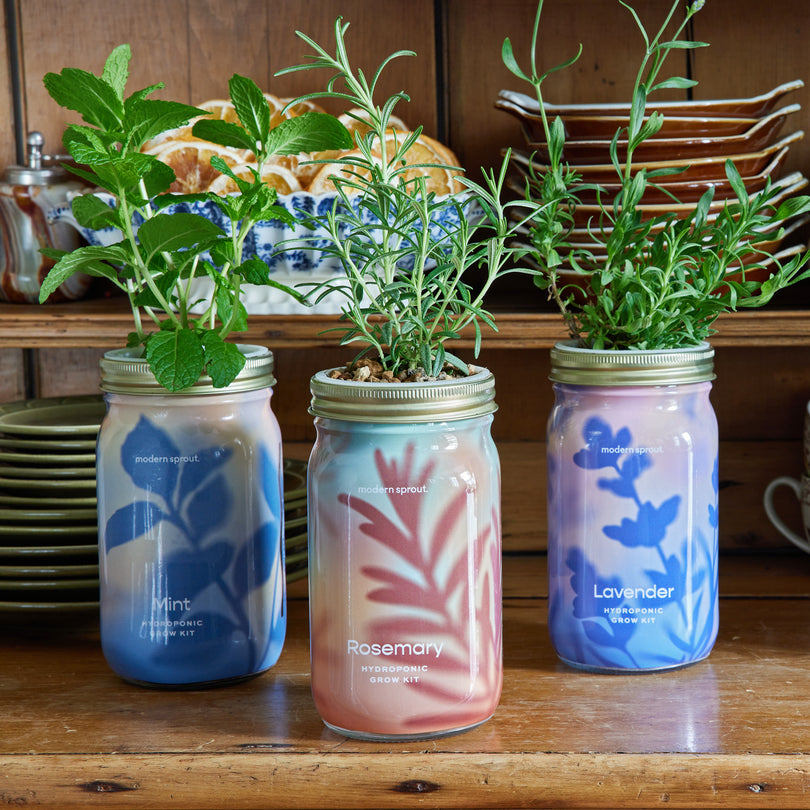
For a single small pot, tear off one perforated strip and use a quart of water instead. The sheets suit houseplants, flowers, succulents, fruits, vegetables and hydroponic grow kits, indoors or outdoors.
Feeding does shift with the season and the plant, and we've written on how often to fertilize indoor plants if you want the longer version. Every pack is backed by our Thrive Promise, so if your plants don't show healthier growth, tell us and we'll make it right.
Plant Food FAQs
What is the difference between plant food and fertilizer?
In everyday use the two words mean the same thing, and both describe a supplement that supplies nitrogen, phosphorus, potassium and trace minerals to a plant whose growing medium has run low. Strictly, plants make their own food through photosynthesis, which makes fertilizer the more precise term.
How often should you feed indoor plants?
Every one to two weeks during active growth is a reasonable default for a gentle formula used at watering time. Most plants slow in late autumn and winter and need less. Heavier monthly concentrates follow a different schedule, so follow the instructions on whichever product you're using.
Can you overfeed a plant with dissolving sheets?
The pre-dosed format makes it considerably harder, because the amount is fixed rather than poured by eye. The formula is built to be gentle enough for every watering. The usual cause of overfeeding is a concentrate measured generously, and a sheet removes that step entirely.
What does 6-9-17 mean on plant food?
Those are the guaranteed percentages of nitrogen, phosphorus and potassium in the formula. Nitrogen supports leaves and stems, phosphorus supports roots and flowers, potassium supports overall resilience. A higher potassium figure points to a formula built for steady health rather than fast leafy growth.
Is seaweed plant food suitable for all plants?
It works on houseplants, flowers, succulents, fruits, vegetables and hydroponic kits, indoors and out. Seaweed-based formulas are generally gentle, which is what allows use at every watering. Very young seedlings are the exception and need little feeding of any kind until their first true leaves appear.