

There's nothing more frustrating than buying a beautiful bunch of basil on Sunday and finding it black and slimy by Wednesday. Fresh herbs are delicate. Stored wrong, they wilt in days. Stored right, they can last two weeks or more.
Glass jars are one of the simplest fixes. They balance moisture and airflow, they keep herbs visible (which means you'll actually use them), and they work for everything from tender bunches of cilantro to woody sprigs of rosemary. The trick is knowing which herbs want water, which herbs want dry, and how to keep both happy in your fridge.

Why Glass Jars Work Well for Fresh Herbs
Glass beats a loose plastic bag or a tight rubber-banded bunch for one simple reason: control. You can adjust moisture, airflow, and visibility based on what each herb actually needs.
Glass jars are useful because they:
-
Make herbs easy to see before they spoil.
-
Help reduce odor transfer from other fridge items.
-
Can be used open, loosely covered, or with water depending on the herb.
-
Are easy to clean and reuse.
-
Make herbs feel more accessible for everyday cooking.

The Bouquet Method for Tender Herbs
Soft-stem herbs like to be treated the way you'd treat a bouquet of flowers. Place the stems in water with the leaves loose. It's the difference between a bunch that lasts three days and one that lasts two weeks.
This method works well for:
How to Store Tender Herbs in Jars
To use the bouquet method:
-
Trim about half an inch from the bottom of the stems.
-
Fill a clean glass jar with about an inch of cool water.
-
Place the herbs upright in the jar.
-
Loosely cover the leaves with a bag if your fridge is very dry.
-
Store the jar in the refrigerator, except for basil.
-
Change the water every 2 to 3 days.
This helps tender herbs stay hydrated without soaking the leaves. If you notice condensation inside the covering, loosen it or remove it for a while.
If you want to take the bouquet method up a notch, our Produce Keepers sit on top of a standard drinking glass and keep stems hydrated while protecting the leaves above. We designed them to extend herb life by up to two weeks, and they're made from FSC-certified bamboo, corn starch, and food-safe materials. Set of two: one keeper sized for sprigs, one for full bunches.
How Long Do Tender Herbs Last
With the bouquet method, parsley and cilantro can often stay fresh for 1 to 2 weeks. Mint may also last longer when its stems are kept in clean water.
To keep herbs fresh:
-
Change the water regularly.
-
Remove wilted leaves as soon as you see them.
-
Recut stems when they start looking dry.
-
Keep different herbs in separate jars.
Separate storage helps preserve each herb’s flavor and prevents one wilting bunch from affecting the rest.
Dry Storage for Hardy Herbs
Not every herb needs water. Hardy herbs with woody stems usually prefer a drier setup.
This includes:
-
Rosemary.
-
Thyme.
-
Sage.
-
Oregano.
These herbs are more likely to spoil from trapped moisture than from slight dryness. For hardy herbs, a dry paper towel and a loose jar setup usually work better than standing them in water.
How to Store Hardy Herbs in Glass Jars
To store hardy herbs:
-
Wash only if needed.
-
Dry the herbs completely.
-
Wrap the sprigs loosely in a dry paper towel.
-
Place them inside a clean glass jar.
-
Cover loosely or leave slightly open.
-
Refrigerate away from moisture-heavy produce.
The paper towel helps absorb extra moisture, while the jar keeps the herbs contained and visible.
Hardy herbs can often stay fresh for 1 to 2 weeks when stored this way. Some may last even longer if they were very fresh when stored.
Preparing Herbs Before Storage
How you prepare herbs before storage affects how long they last. A few minutes of trimming, sorting, and drying can prevent a bunch from turning slimy too quickly.
Should You Wash Herbs First?
It depends on where the herbs came from.
For homegrown herbs, rinsing may be needed to remove soil, dust, or tiny garden debris. For store-bought herbs, check for visible dirt before washing.
If you do wash herbs, dry them completely before storing. Wet leaves trapped in a jar can spoil quickly.
Good drying methods include:
-
Gently patting with a clean towel.
-
Using a salad spinner for leafy herbs.
-
Laying herbs in a single layer until surface moisture is gone.
-
Letting stems air dry briefly before placing them in jars.
Never store herbs while they are dripping wet.
Trim and Sort Before Storing
Before placing herbs in jars, remove anything that is already damaged.
Trim away:
-
Slimy stem ends.
-
Yellowing leaves.
-
Bruised leaves.
-
Brown or black spots.
-
Weak stems that are already collapsing.
Keep herbs whole until you are ready to cook. Chopped herbs lose freshness faster, so it is better to cut only what you need right before using them.
For more ways to reduce waste and get better everyday use from herbs, Modern Sprout’s guide on making the most of your herbs is a helpful companion to better storage habits.
Matching Storage Methods to Herb Types
Different herbs behave differently after harvest. The right storage method depends on stem texture, leaf softness, and temperature sensitivity.
Best Storage for Basil
Basil hates the fridge. Cold turns the leaves black and dulls the flavor fast. It's the one herb that does better on your counter, treated like a bouquet of flowers.
To store basil:
-
Trim the stems.
-
Place the bunch upright in a glass jar with about an inch of water.
-
Keep it on the counter away from direct sunlight.
-
Change the water daily.
-
Use the leaves within a few days for best flavor.
Do not seal basil tightly. It needs gentle airflow. If your kitchen is dry, you can loosely cover the leaves, but avoid trapping too much moisture.
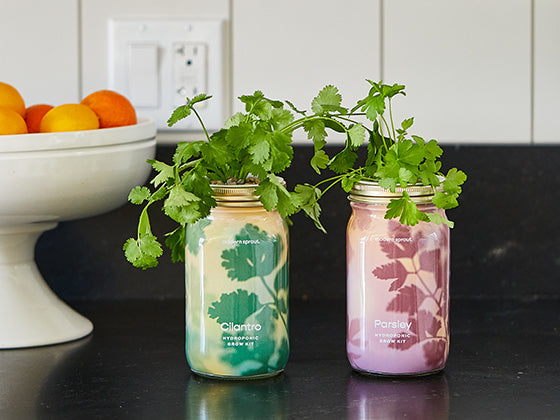
If you find yourself buying basil weekly and watching half of it go black, a grow kit is the actual fix. We designed ours for kitchen counters and small spaces, which means you're snipping fresh leaves right when you need them.
And if you're storing store-bought basil on the counter, our Produce Keepers work for that too. Stems stay in water, leaves stay protected, no DIY plastic-bag setup required.
How to Store Cilantro and Parsley
Cilantro and parsley both love the bouquet method covered above. Two extra tips for these specifically: keep them in separate jars (the aromas are strong and distinct), and check for yellowing leaves daily. Both herbs wilt from the outside in, so pulling damaged leaves early extends the rest of the bunch.
How to Store Mint, Rosemary, Thyme, and Sage
Mint follows the bouquet method like its tender herb cousins, and rewards the effort if you use it for cocktails, tea, or summer salads. Rosemary, thyme, and sage all prefer dry storage. Wrap them in a paper towel, place them in a loose jar, and keep them in the fridge. They're the easiest of the bunch.
Preventing Moisture and Mold Problems
Even if you use glass jars, herbs can still spoil if moisture builds up or airflow is too limited.
Signs Your Herbs Are Stored Incorrectly
Watch for:
-
Slimy stems.
-
Wilted leaves.
-
Dark spots.
-
Black edges on basil.
-
Condensation inside the jar.
-
Sour or off smells.
-
Leaves sticking together.
These signs usually mean there is too much moisture, not enough airflow, or the herb is stored in the wrong temperature zone.
How to Balance Humidity and Airflow
Fresh herbs need a small amount of moisture, but they should not stay wet.
The fixes are usually small. Loosen a lid if you see condensation. Add a paper towel if a hardy herb feels damp. Pull damaged leaves before they spread. A clear jar makes this easier because you can spot problems before they spread.

Where to Store Herbs in the Fridge
Fridge placement affects herb shelf life. Some areas are too cold, some are too humid, and some expose herbs to produce that speeds wilting.
Good fridge storage tips include:
-
Use a stable shelf for tender herbs in jars.
-
Avoid placing herbs where they may freeze.
-
Keep herbs away from ethylene-producing fruits like apples and tomatoes.
-
Avoid packing jars beside moisture heavy vegetables.
-
Check jars every few days for condensation or wilting.
The best spot may vary depending on your fridge, so pay attention to where your herbs stay freshest.
Drying Herbs for Long-Term Storage
If you have more herbs than you can use fresh, drying them is a better option than letting them wilt. Dried herbs work well for soups, stews, sauces, roasted vegetables, and seasoning blends.
Air Drying Herbs at Home
Air drying works especially well for hardy herbs like rosemary, thyme, oregano, and sage.
To air dry herbs:
-
Gather clean, dry stems.
-
Tie a small bunch with string or a rubber band.
-
Hang upside down in a dark, dry place with airflow.
-
Wait until the leaves feel crisp.
-
Strip the leaves and place them in clean glass jars.
Avoid drying herbs in direct sunlight because too much light can reduce color and flavor.
Storing Dried Herbs in Glass Jars
Dried herbs should be stored differently from fresh herbs. Once fully dry, they need airtight storage to protect flavor and aroma.
Use:
-
Clean glass jars.
-
Tight lids.
-
Labels with the herb name and date.
-
A cool, dark cabinet or pantry.
Keep dried herbs away from heat, steam, and direct light. Properly dried and stored herbs can keep good flavor for several months, though they are usually best when used regularly rather than forgotten in the back of the pantry.
Make The Jars Work For You
Storage is only half the job. The other half is actually using the herbs before they wilt. A few habits that help: keep your jars on a visible fridge shelf (not buried behind the leftovers), use tender herbs first because they're on the shortest clock, and let what's about to wilt drive what you cook. A jar of parsley about to turn becomes pesto, chimichurri, or the green on top of tonight's pasta.
Conclusion
Learning how to store herbs in jars is a simple way to keep fresh herbs useful for longer. Tender herbs often do best upright in water, hardy herbs prefer a drier jar setup, basil usually belongs on the counter, and dried herbs need airtight glass containers away from heat and light.
The best storage method comes down to moisture, airflow, and visibility. When herbs are clean, dry, trimmed, and stored by type, they are easier to use before they wilt.
Modern Sprout helps make fresh herb care feel more natural with stylish herb growing options and plant care essentials designed for modern kitchens and small spaces. With the right jars, a few simple habits, and herbs kept within reach, every meal gets a little fresher, greener, and more flavorful.
Herb Storage FAQs
How long do fresh herbs really last in jars?
This depends on the herb and the storage method. Tender herbs in water (parsley, cilantro, mint) usually go 10 to 14 days if you change the water every couple of days. Hardy herbs in dry storage (rosemary, thyme, sage) often last just as long, sometimes longer. Basil on the counter has the shortest clock, lasting about 5 to 7 days at peak flavor.
Can you freeze fresh herbs?
Yes, and it's underrated. Chop tender herbs, pack them into ice cube trays with a little olive oil or water, and freeze. They won't be great as a garnish anymore (texture changes), but they're perfect for soups, sauces, and anything that gets cooked. Hardy herbs can be frozen whole on a sheet pan, then transferred to a jar.
Do I need to wash store-bought herbs before storing?
Only if they look dirty. Washing adds moisture, which is the enemy of long storage. If you do wash them, dry them completely (a salad spinner is your friend) before they go in the jar. Wet leaves rot fast.
Why does my basil keep turning black?
Almost always the fridge. Basil is tropical and hates the cold. Anything under 50°F damages the leaves. Keep it on the counter in a jar of water, away from direct sun, and use it within a week. If you find yourself buying it constantly, a windowsill grow kit pays for itself in a season.
Should I store mint with my other herbs?
Better not to. Mint is aromatic enough that it can flavor neighboring herbs in a shared jar. Give it its own jar of water, and you'll get better flavor out of everything.

