
What Plant Food Actually Does
Potting soil starts out loaded with nutrients. It doesn't stay that way. Every time you water, more of that mineral content rinses out through the drainage hole. A plant in the ground sends roots out hunting for more. A plant in a pot is stuck with whatever you hand it. Plant food replaces what the pot loses.
Most formulas are built around three numbers, the N-P-K ratio: nitrogen for leaves and green growth, phosphorus for roots, flowers and fruit, potassium for overall vigor. Our Dissolving Plant Food Sheets run 6-9-17, and the liquid comes in two ratios depending on what your plant is working on.
Plant food and fertilizer mean the same thing in everyday use, and you'll see both words here. More on why a potted plant needs feeding: why your plants need plant food.
Liquid Concentrate or Dissolving Sheets
Two formats, two different habits.
Plant Nutrients is an 8 oz kelp-based liquid concentrate, 100% soluble, so it disappears into a watering can instead of clumping at the bottom. Grow (4-3-2) supports vegetative growth, a technical way of saying leaves: greens, foliage, most houseplants. Bloom (2-2-4) is for fruiting and flowering botanicals. Liquid plant food is the pick when you want to set the dose yourself, and it works as a liquid fertilizer for indoor plants or outdoor pots.
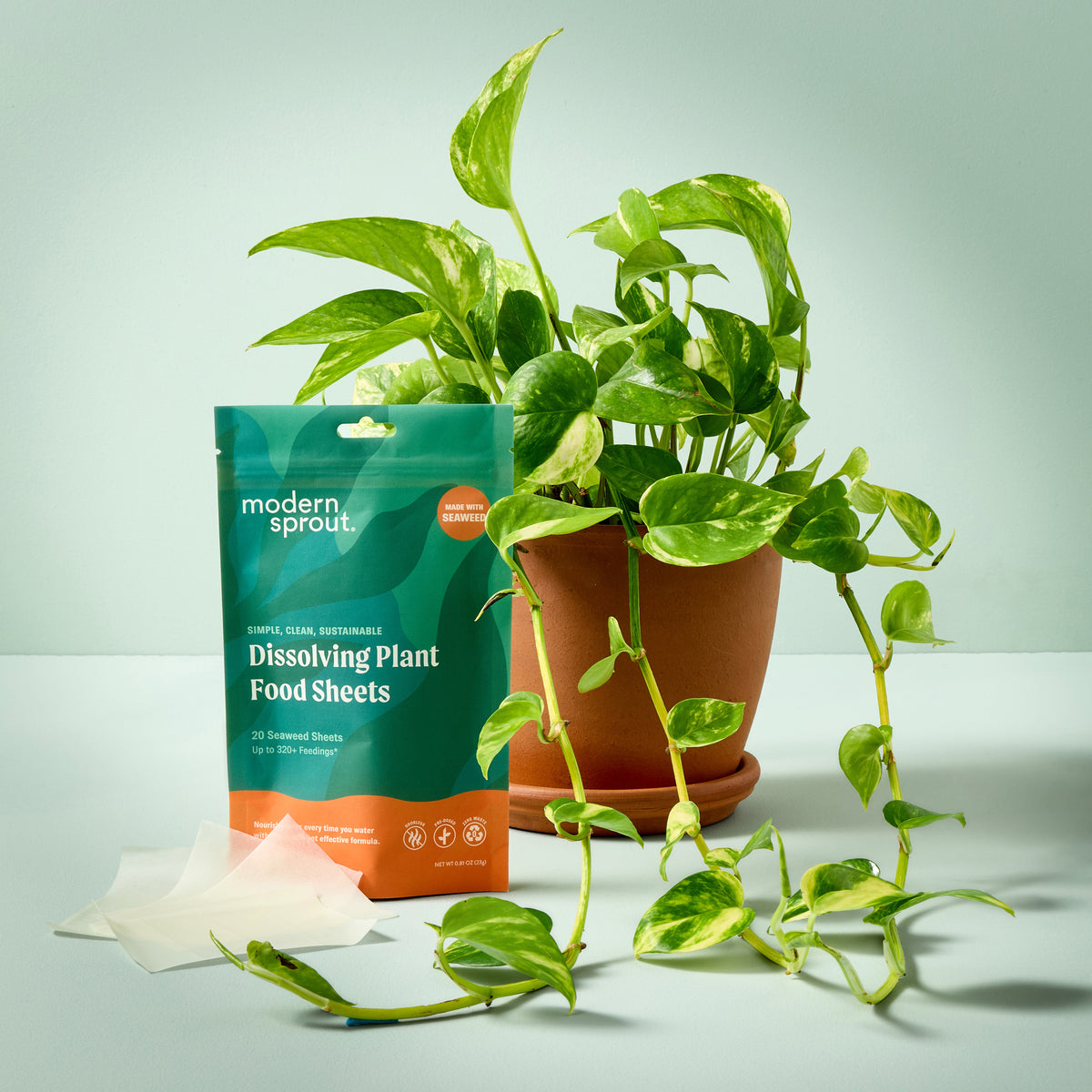
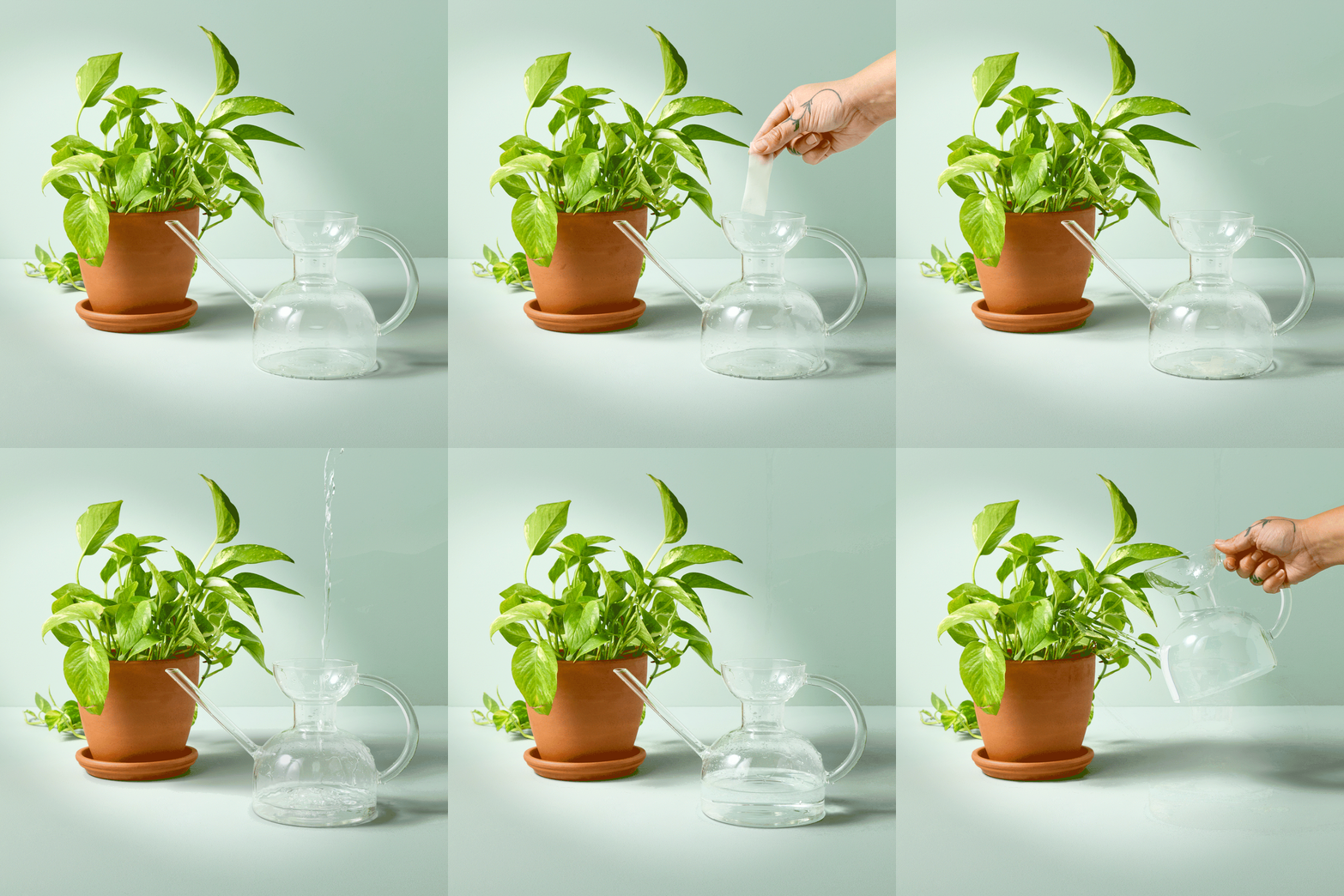
Dissolving Plant Food Sheets deliver the same idea without the measuring cup. Each sheet is pre-dosed and perforated: one sheet per gallon, one strip per quart. Drop it in, stir, water as usual. Odorless, mess-free, gentle enough for every watering. A 20-pack makes 20 gallons and up to 320 feedings at $19.99. There's a 50-pack at $34.99 and a $5 three-pack sample.
We don't make spikes or slow-release granules, which feed on their own schedule once they're in the pot. A water-soluble fertilizer hands dose and timing back to you.
Made from Seaweed, Not Synthetics
The sheets are the part we're proudest of. Concentrated nutrition delivered on a sheet of sugar kelp, thinner than a piece of paper, no fillers and no plastic. The kelp is grown and harvested by Dirigo Sea Farm, a small woman-owned operation in Maine, and the sheets are assembled here in Chicago. Sodium alginate from that kelp is listed as a beneficial substance, and it earns the spot: seaweed helps regulate nutrient uptake, which is why the formula stays mild enough for regular feeding.
Kelp grows without fresh water, chemicals or land, and captures carbon along the way. The sheets are plastic-free and the pouch is backyard compostable. If you're shopping for organic plant food, we'll be precise: both formulas are all-natural and kelp-based rather than certified organic.
How Often to Feed Indoor Plants
Indoor plant food runs on the plant's calendar, not yours. Feed during active growth, roughly spring through early fall, and ease off in winter dormancy when most houseplants slow down. Liquid concentrate suits a two to four week rhythm. Sheets are mild enough for every watering, with the pouch directing one sheet every week or two depending on how often you water.
Two habits prevent most trouble. Feed onto damp soil rather than bone-dry, because concentrated minerals hitting dry roots is how fertilizer burn starts. And skip feeding for a month or two after repotting, since fresh potting mix comes preloaded.
When you're unsure, under-feed. The best fertilizer for houseplants is the one you'll remember to use, which is most of the reason we built a houseplant fertilizer that needs no measuring.
As indoor plant fertilizer goes, both are all-purpose and work outdoors too: herbs, vegetables, flowers, succulents, the monstera and the fiddle leaf fig. Round out the routine with our plant care essentials, a live plant, or a grow kit.
Plant Food Questions, Answered
Is plant food the same as fertilizer?
In practice, yes. Plant food is the consumer term for fertilizer. The botanical nitpick is that plants make energy from light and take minerals from soil, so you're topping up minerals.
How often should I use plant food on indoor plants?
Plant food for indoor plants follows the season. Liquid concentrate every two to four weeks during active growth. Sheets are gentle enough for every watering, with directions calling for one every one to two weeks.
What is plant food made of?
Nitrogen, phosphorus and potassium, plus micronutrients. Ours come from kelp and other natural land and sea sources. The sheets are 6-9-17, the liquid 4-3-2 for Grow and 2-2-4 for Bloom.
Does plant food expire?
Minerals don't spoil. Stored sealed in a cool, dry spot, both formats keep well. Dry sheets hold up longer than an opened bottle, one more argument for the pre-dosed format.
Can I use plant food on outdoor plants, vegetables and herbs too?
Yes. Both formulas are all-purpose, indoors or out, on houseplants, herbs, vegetables, flowers and succulents. Choose Grow for greens and foliage, Bloom for fruiting and flowering plants.